The stag trophies are looking at me with silent outrage; they didn’t choose to be here, unlike me.
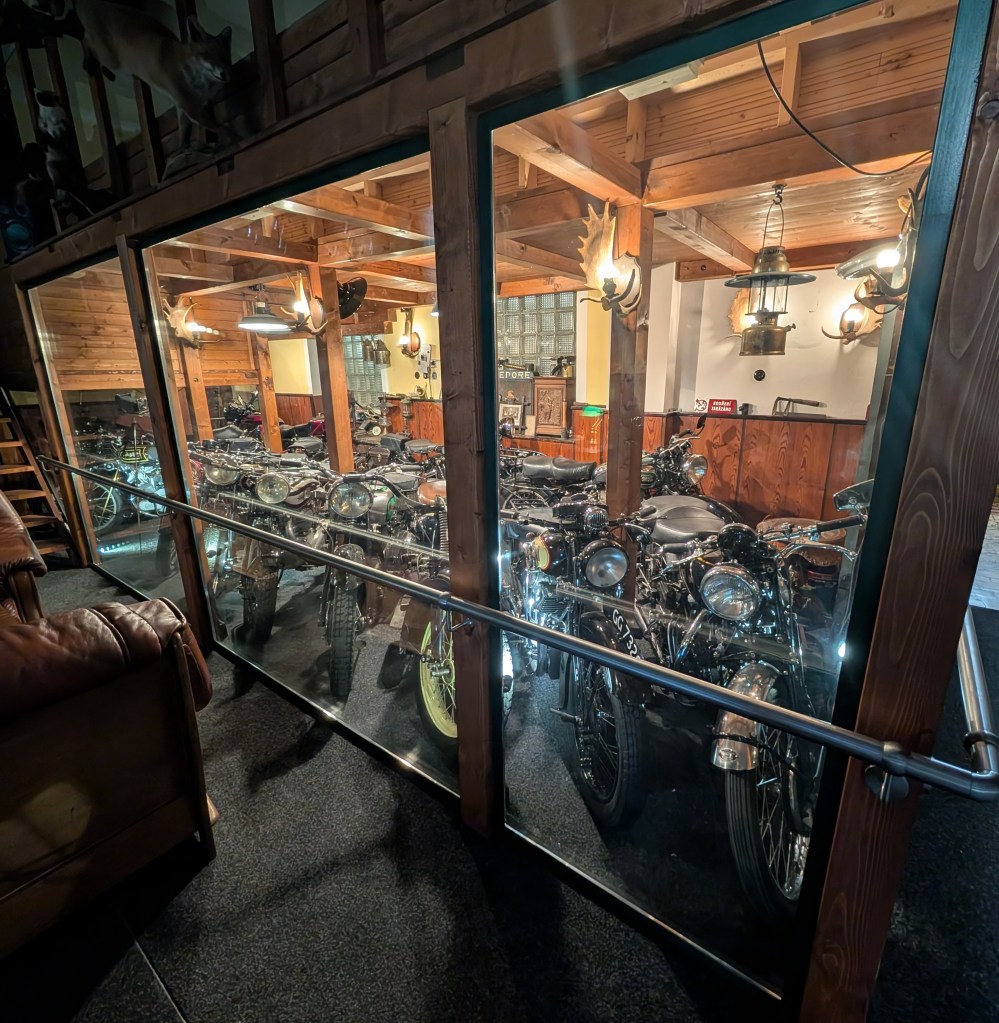
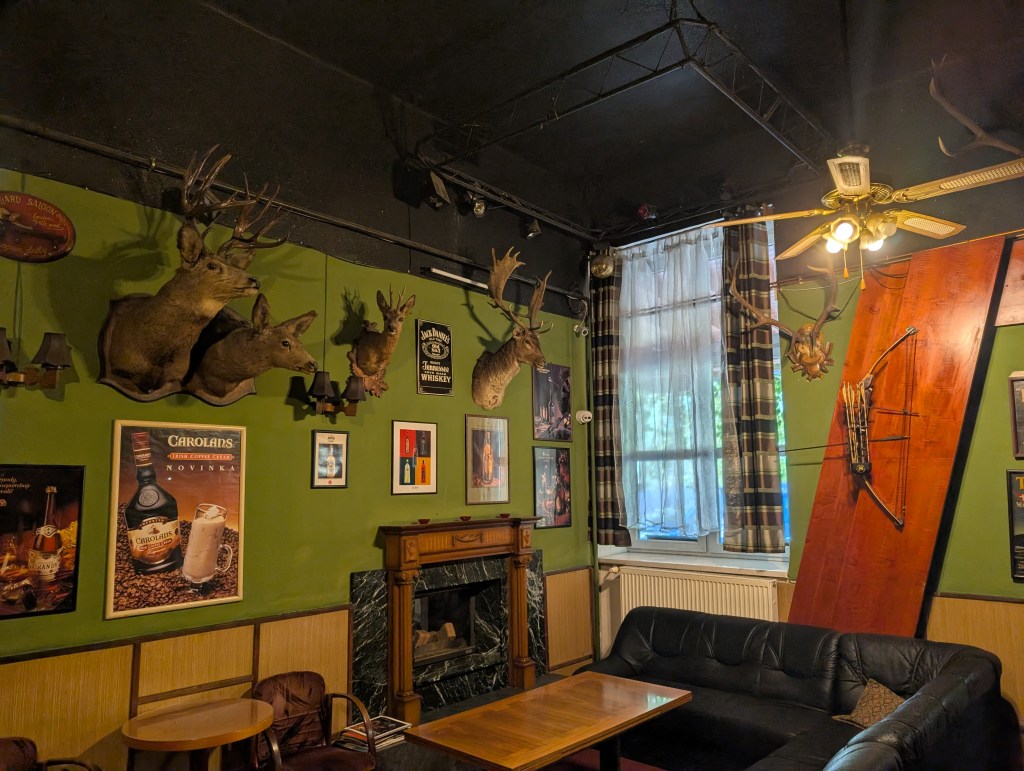
I would have probably picked a different place if I had known that I was not their target audience. The vintage machismo decor, the motorcycles behind a glass panel, stuffed animal heads hanging from the walls, an entire shooting range on the hotel’s premises, reminders at every corner to chug those whisky drams, it does have a certain charm to it, but it leaves me conflicted. After all, long gone are my days of excitement for shows like Sons of Anarchy or Mayans M.C. But here I am, at least it’s cheap, at least it’s close to the city centre, at least I could spend only a few bucks to transport my sorry ass from the bus station. And then there’s free breakfast, hey!
My lower back is still burning and I keep praying to Eric Goodman to save me once more; he does, so for my only full day in Ostrava I am ready to deal with a few mundane items on my list, always with some adventures. I am sitting in the laundromat and a stray mobile left on one of the seats starts ringing viciously. Fuck if I understand the Czech language, but of course I can keep an eye on it for the duration of my stay at the laundry; and before long, some gasping old codger, the same one I passed on my way in, arrives and breathes a sigh of relief at seeing his belongings intact. All’s well that ends well, and I am ready to conquer the Dolni Vitkovice industrial complex.
‘You know what that is, Nicky, do ya? A condominium.’ Frank Sobotka says these words to his nephew while looking at the steelworks in decay, a past Baltimore-based symbol of the American heavy industry.
Not that the stories from the state of Maryland or the Rust Belt are unique to North America. Half of central Europe, including Ostrava with its pig iron factory at the Lower Vitkovice, fell victim to the same process of deindustrialization, with production moving in a typically capitalistic manner to countries where it’s cheaper and one can squeeze the workers without much opposition from trade unions, or activists, or the regulatory bodies of the government. Too often it’s a phenomenon connected with deepening socioeconomic divisions, decay of families, increased suicide rates, poverty.
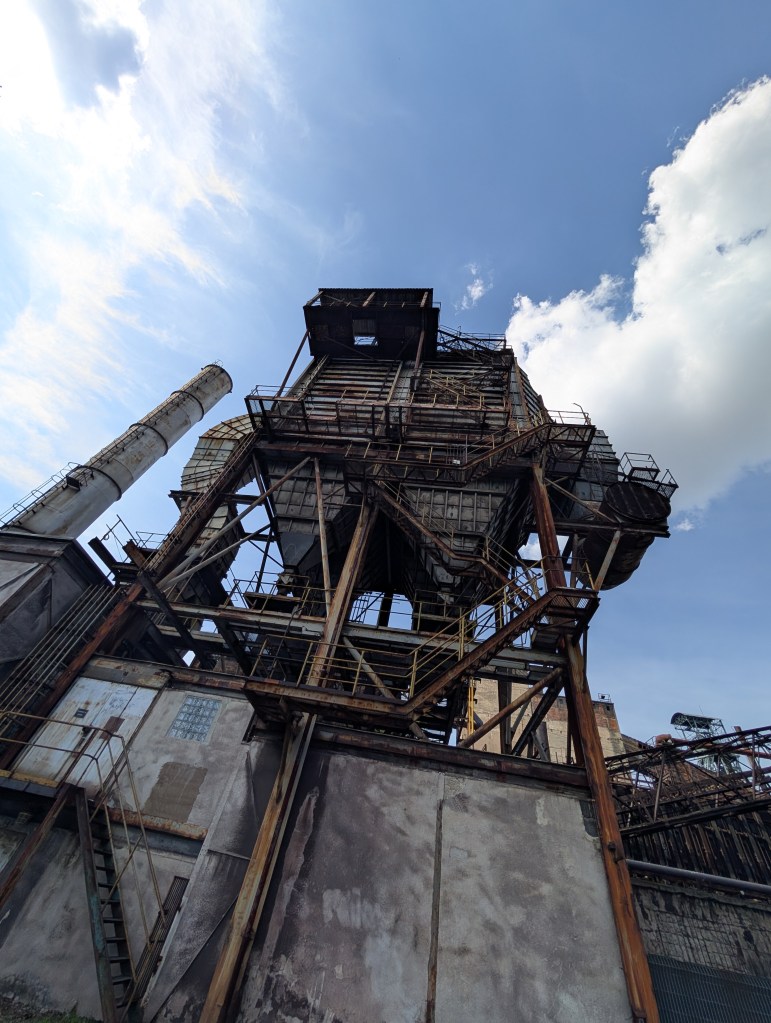
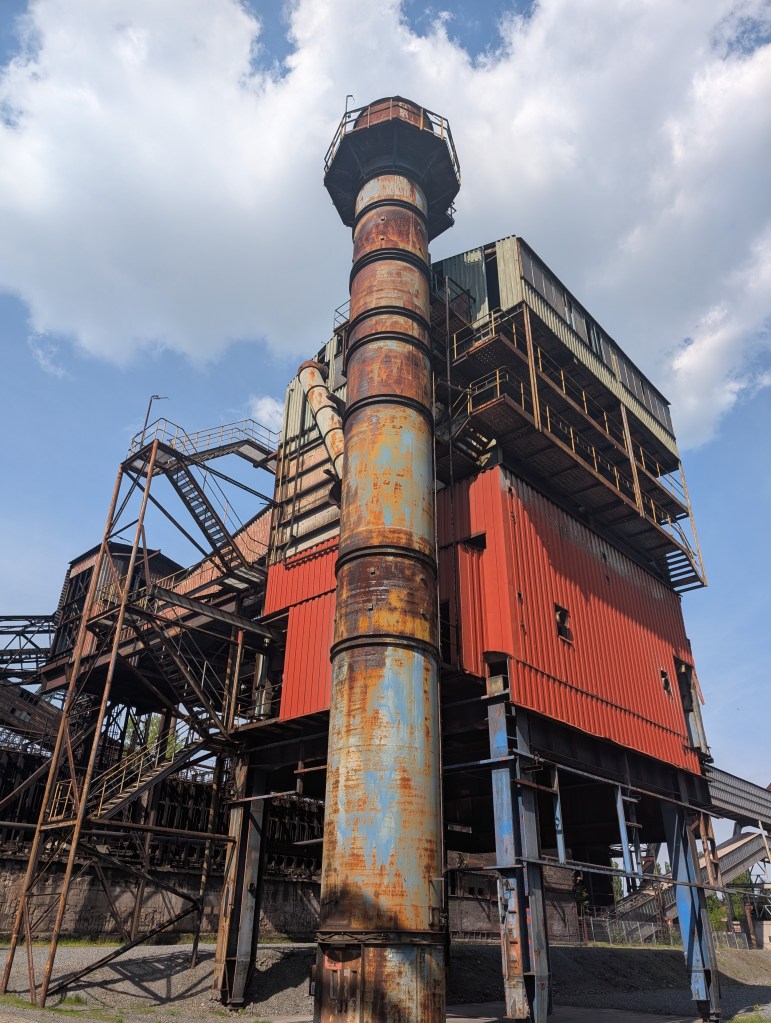
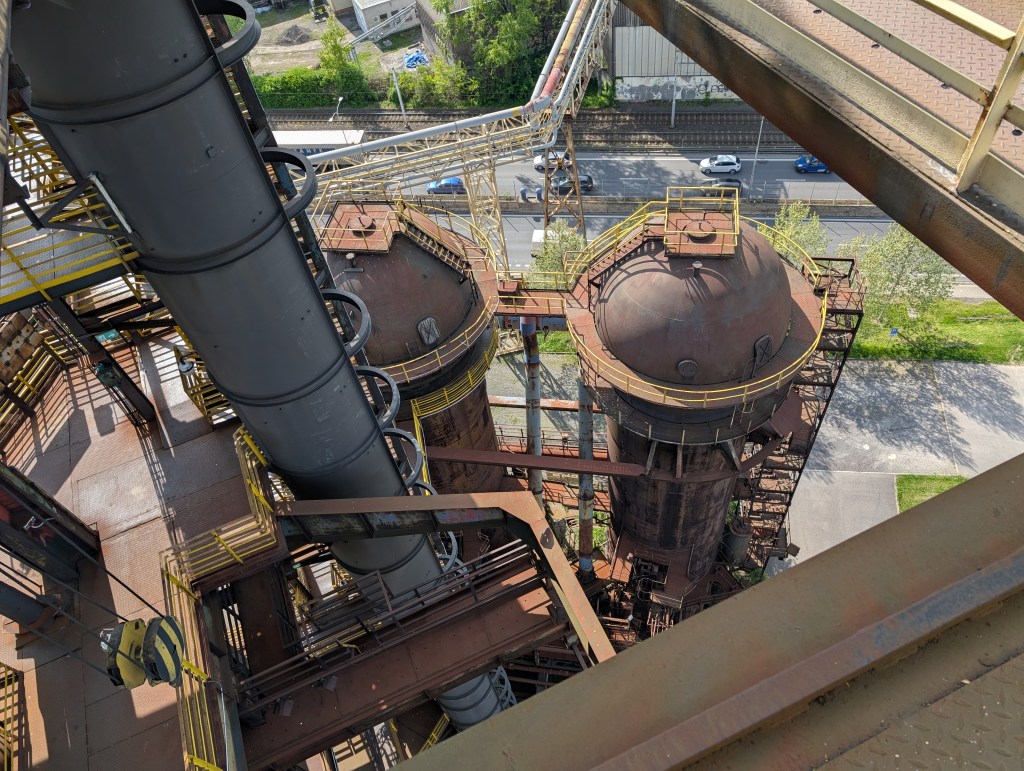
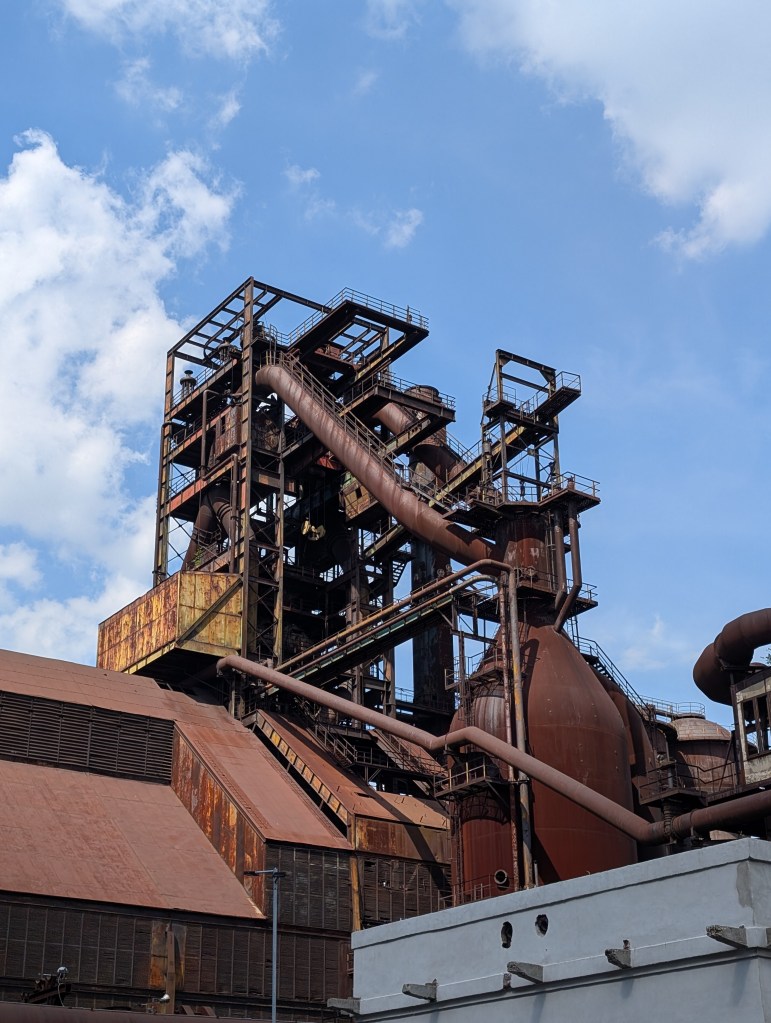
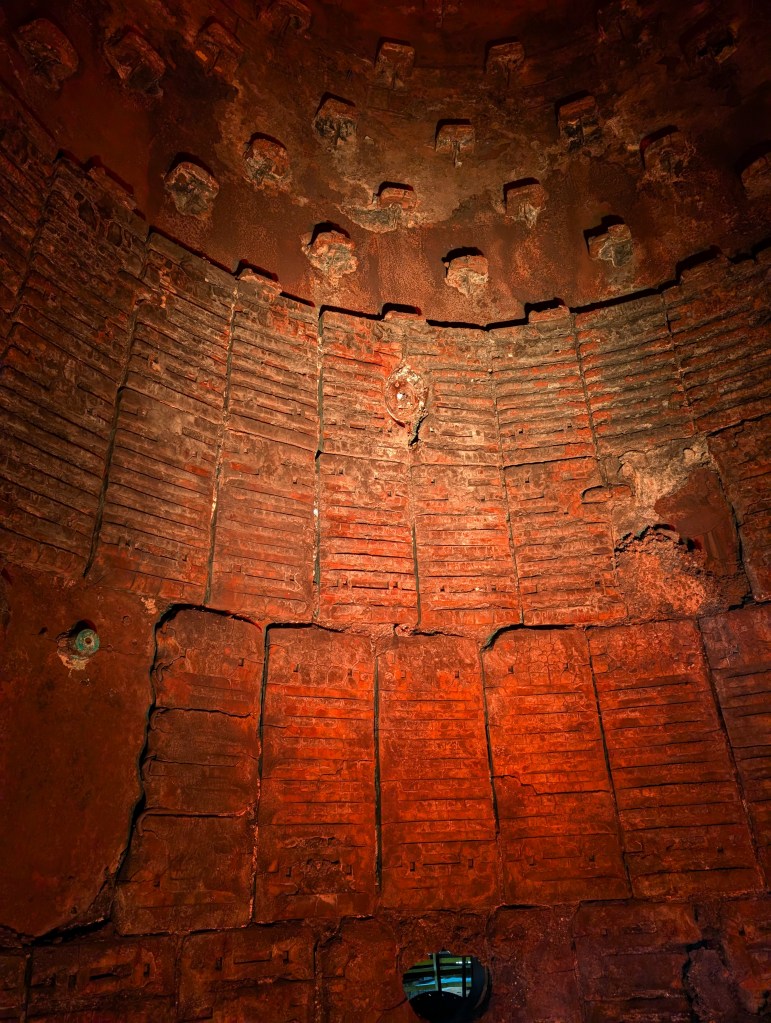
Not that it is much discussed during a tour me and two other guys take from the Bolt tower to the inside of one of the furnaces once used in the production of pig iron. Our guide speaks Polish fluently; he claims to have never learnt it deliberately, and all his knowledge of it is limited to what he overheard, living for many years in the borderlands. He used to work here when they shut down the last furnace back in 1998; 27 years later he still explains the production process with a flicker in his eyes, and there is a noticeable tinge of excitement in his voice.
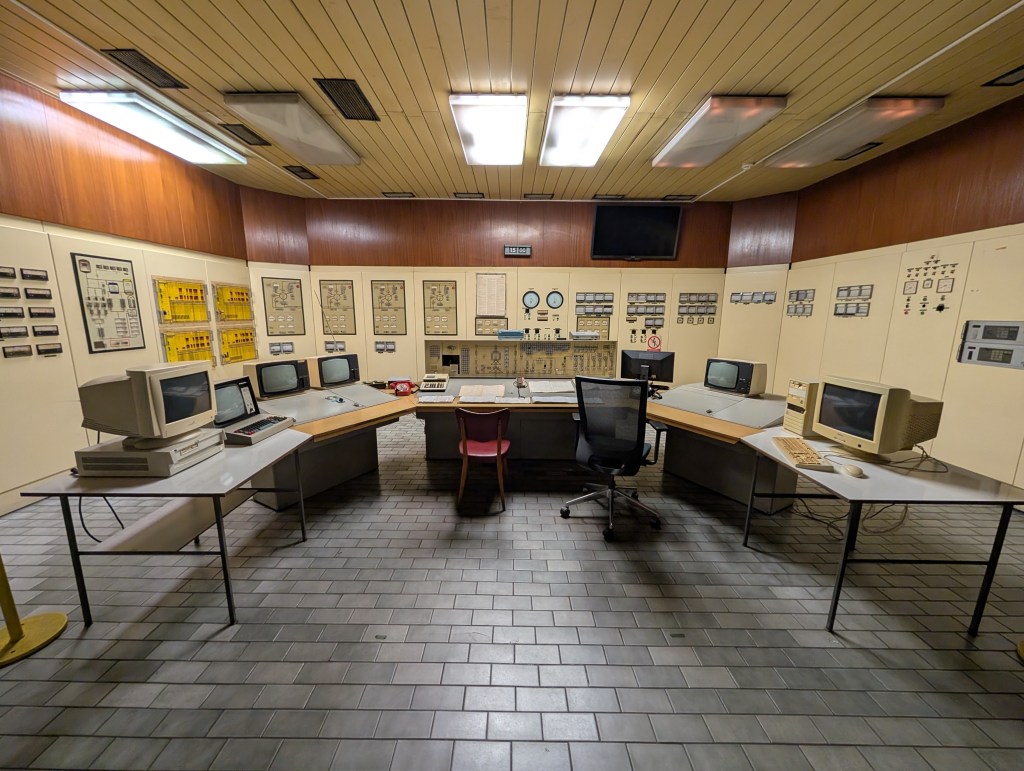
But what we observe is the degradation of the towering constructs, the rust eating into the stacks and the cooling pipes and the ovens, the overwhelming quiet of what once teemed with life. The furnace still makes a spectacular impression from the inside, but it’s cold; the command center glimmers with a thousand lights, but it’s only for a few seconds, before the guide turns off the obsolete machinery. He smiles but there is a lot of unspoken sadness in his face; he is painfully aware that the chapter he’s just summarized is never going to be reopened. The cruel walk of history continues.
 Luke, around the world.
Leave a comment