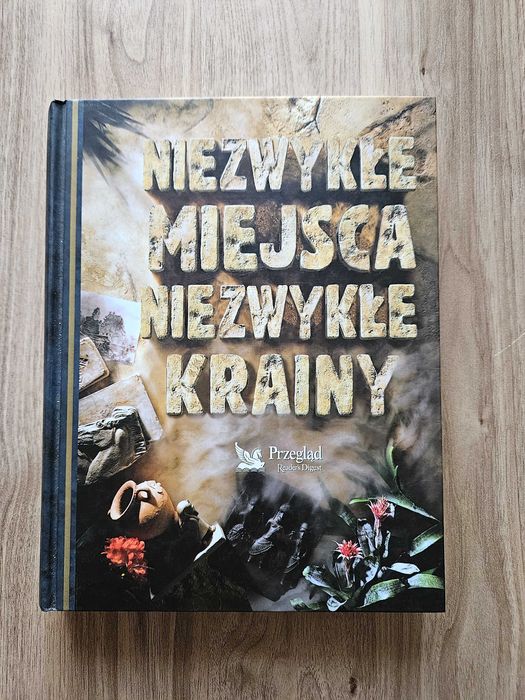
There was a boy once, myopic and with a crooked spine; though physically frail, he was unusually curious about the world, and able to absorb knowledge like a sponge sucks the water out of a bathroom floor puddle. As an adult, he no longer remembered whether it was for his birthday or for Christmas, or whether the book was even meant to be his, but his parents made a mistake and showed him a Reader’s Digest album called Unusual places, unusual lands. Together with travelogues and Alfred Szklarski’s adventure novels, it used to be the boy’s reading staple. Some parts of it were a bit outlandish, pondering the existence of places fictional and legendary, but the bulk of it dealt with very real destinations, and yet, for the boy’s naive self, destinations that were impossible to reach. But the seed was planted, and a little child knew it wanted to explore the world since it turned six.
Some thirty years later, the boy has grown up to be a man. No longer frail, though still myopic, he is on a bus heading towards Kalabaka, a town located in the Trikala region, the region he knows very well from that old RD publication. There is just one bus a day going there from Ioannina, and the window seat is occupied by an old Greek grandma. She doesn’t speak English at all, but her disarming smile makes the man forgo his seat and nestle down in the aisle one. She keeps talking to the man in her ancient mother tongue, and then she unpacks some sweets and biscuits to share. Food, the universal language that can bridge insurmountable gaps, and turn strangers into friends.
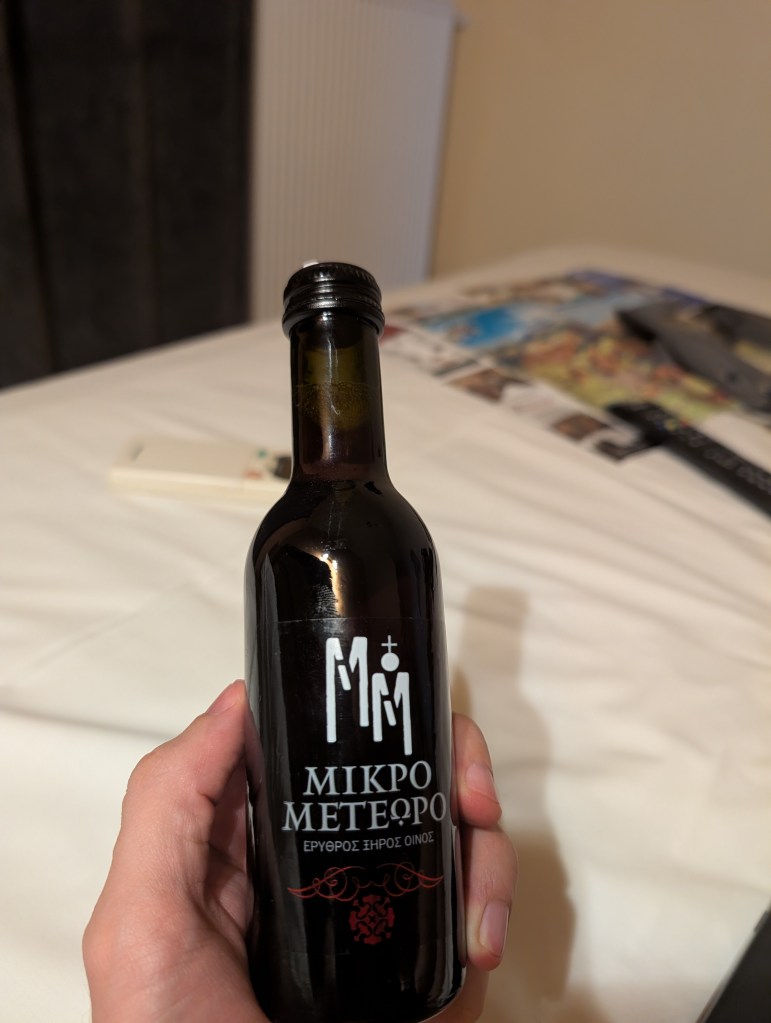
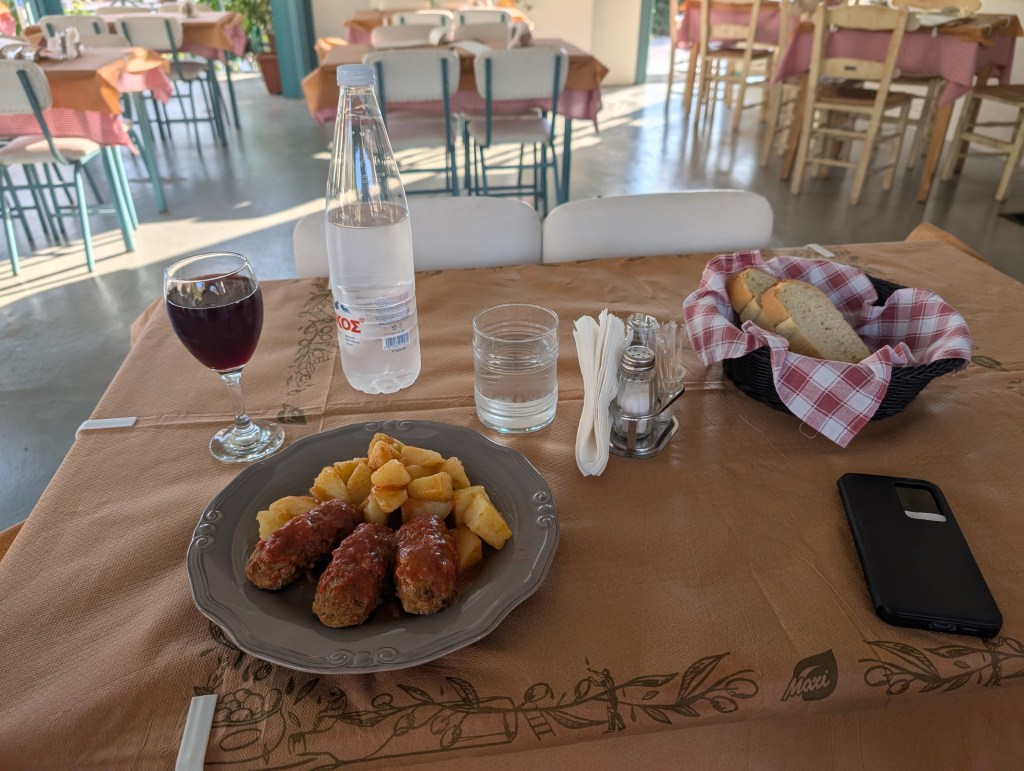
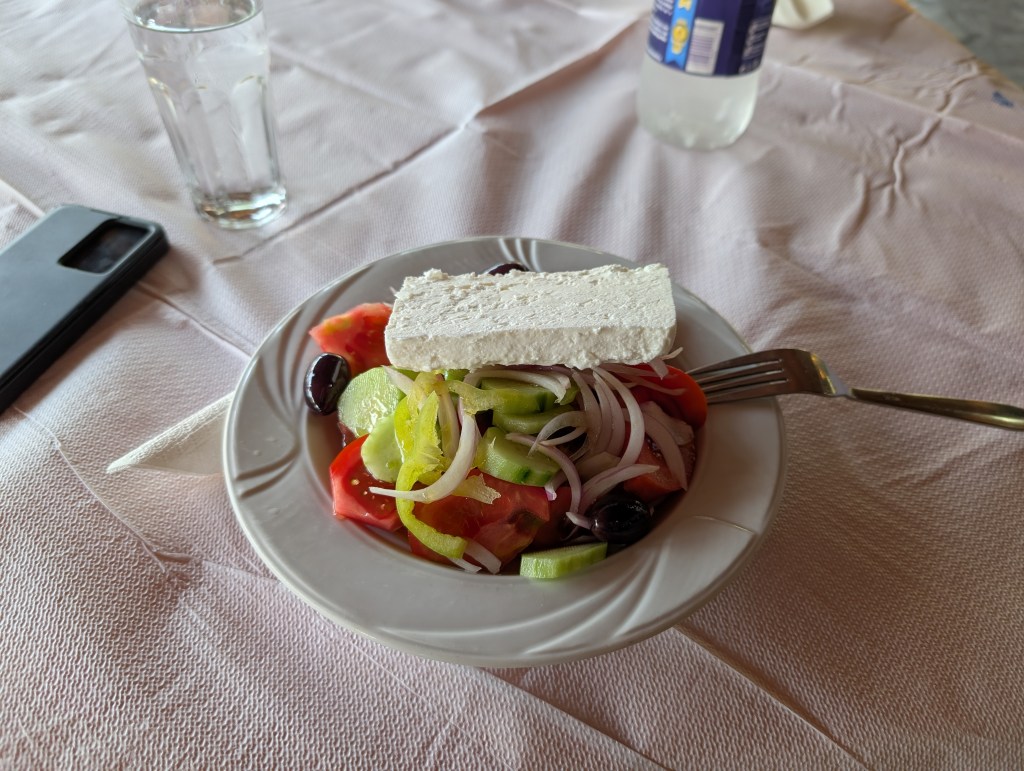
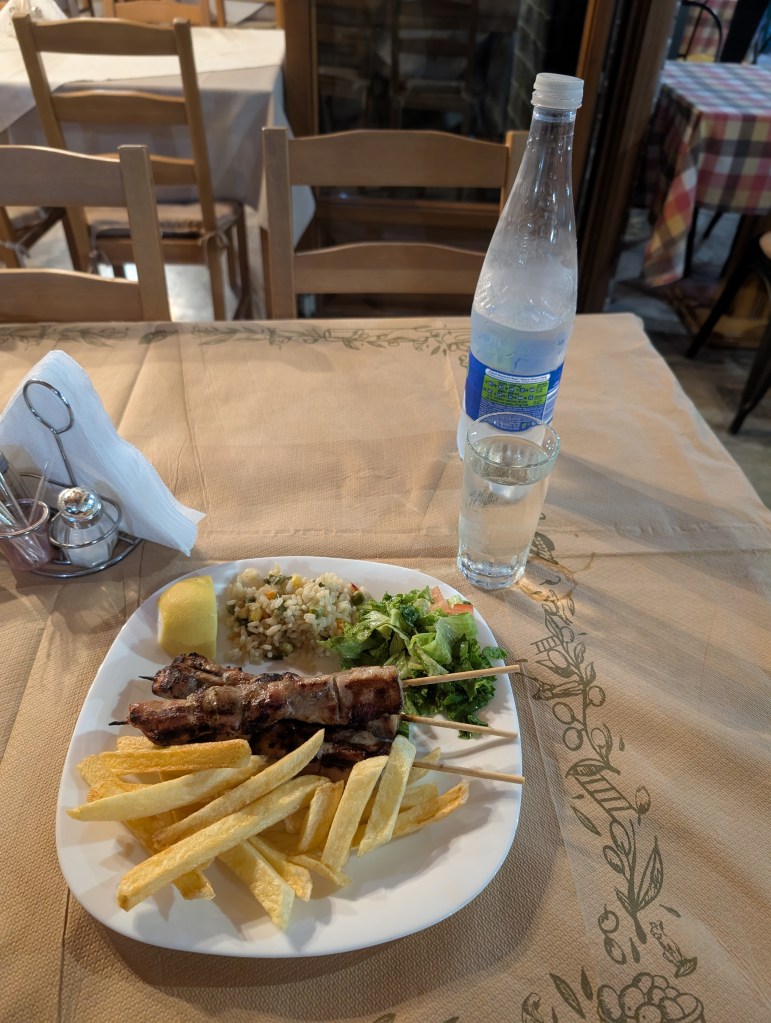
My stay in Ioannina was too short to enjoy the Greek cuisine, but I make up for it in Kastraki, a little village adjacent to the bus’s destination. Meatballs, souvlaki, moussaka, you name it, they have it, and then I can wash it down with homemade red wine. I buy more of it, just a small bottle, at one of the family-run convenience stores close to my hotel. Another Greek grandma, but this one can speak a bit of English, helps me with wine selection; I pick up a local red and enjoy its mildly bitter taste.
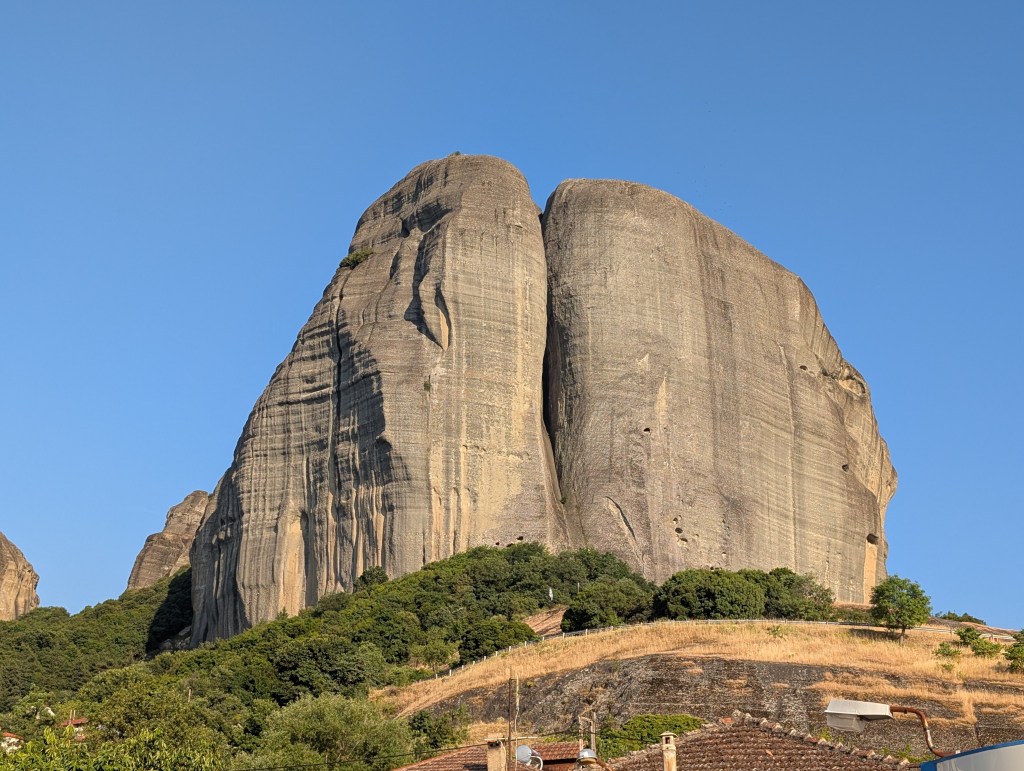
The truth is, I haven’t come here just for food; to me, the Meteora is one of the greatest natural wonders of the world, where unusual geology was once used for daring architectural endeavours.
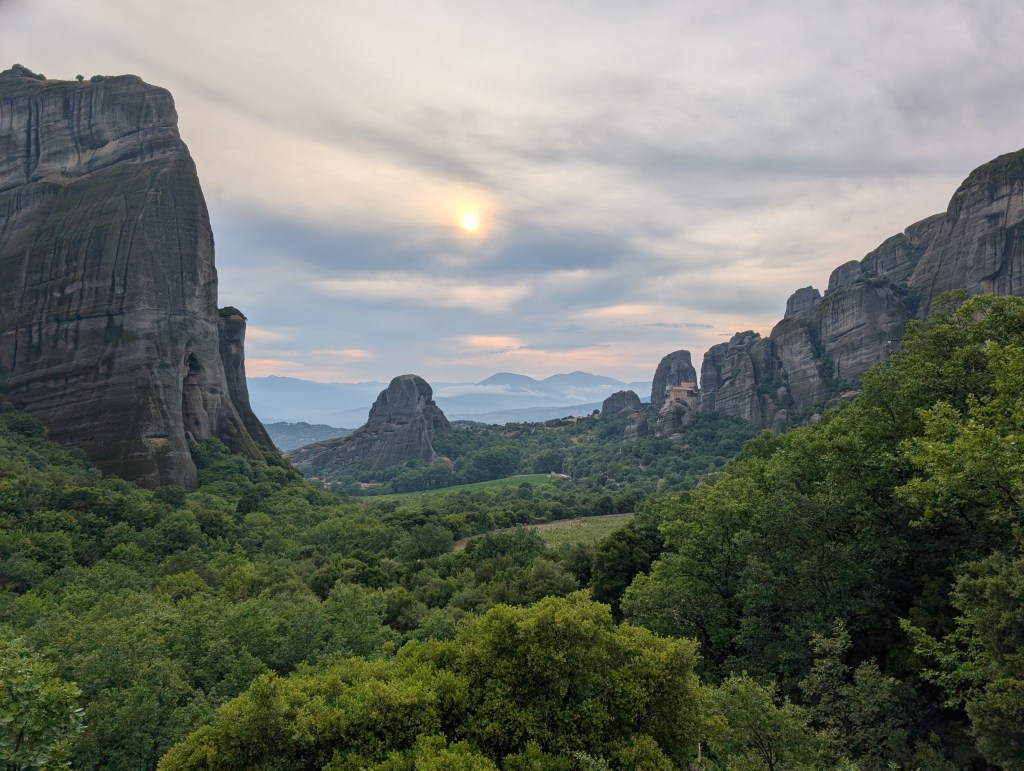
Wherever I look, I am surrounded by monumental rocky columns made of sandstone and sedimentary conglomerate. What makes Meteora special is how limited this bizarrely looking area is within a broader mountain formation that surrounds it; its unusual geological composition is unique on a global scale. Despite continuing tectonic activity of the region, the massive rocks still stand, and so do the monasteries on top of them.
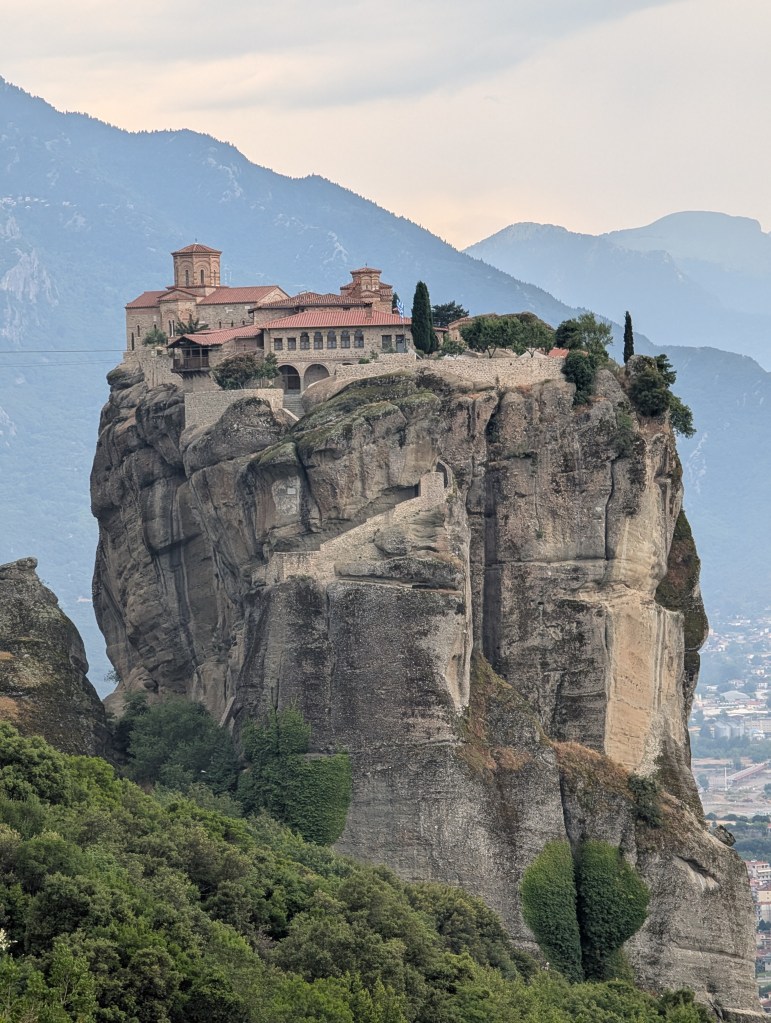
I found it interesting that the Meteora is never mentioned in ancient Greek literature; something so poetic in a menacing, otherworldly way should have been picked up by storytellers regaling the agora visitors with myths of creation and transformation; and yet, there is unexplained silence about this natural wonder in the culture of ancient Greece. The first post-Neolithic people who got the insane idea to inhabit the towering monuments were Christian hermits in the 9th century. While a primitive, monastic state was in place already in the 1100s, it took almost two more centuries to build proper monasteries, partly in reaction to deepening Turkish expansion. But the Greek monks must have seen what their ancient counterparts apparently missed – the rocks seemed constructed with divine touch, a bit closer to the firmament, therefore closer to God, offering a place of solitude, wonder, and contemplation.
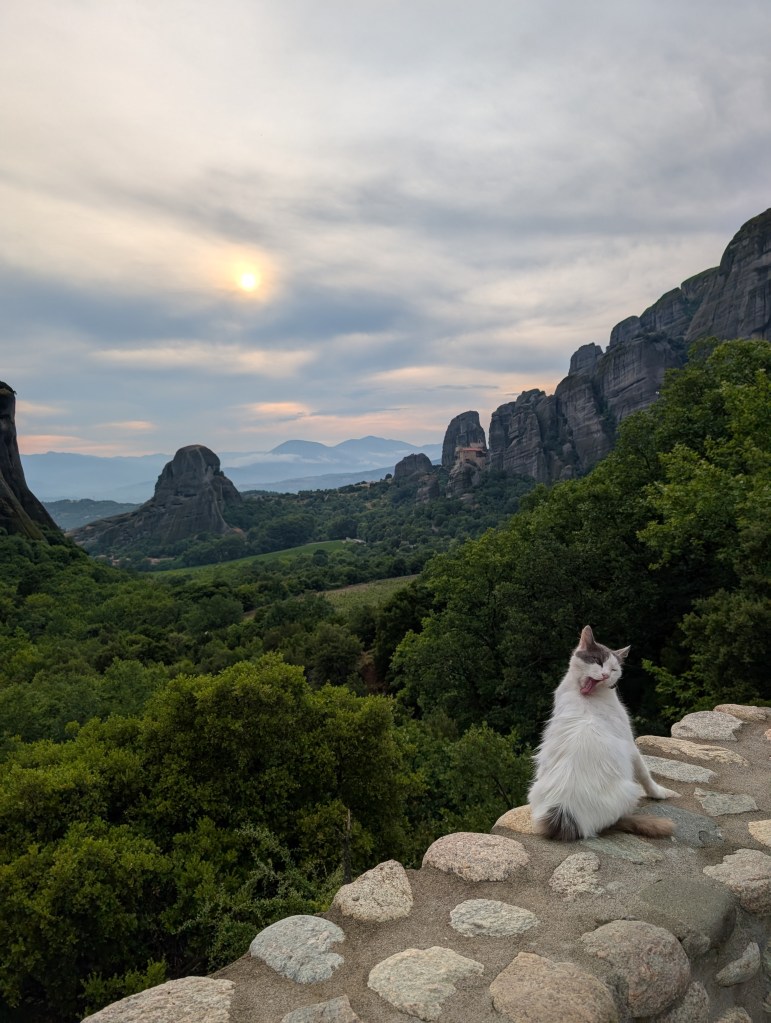
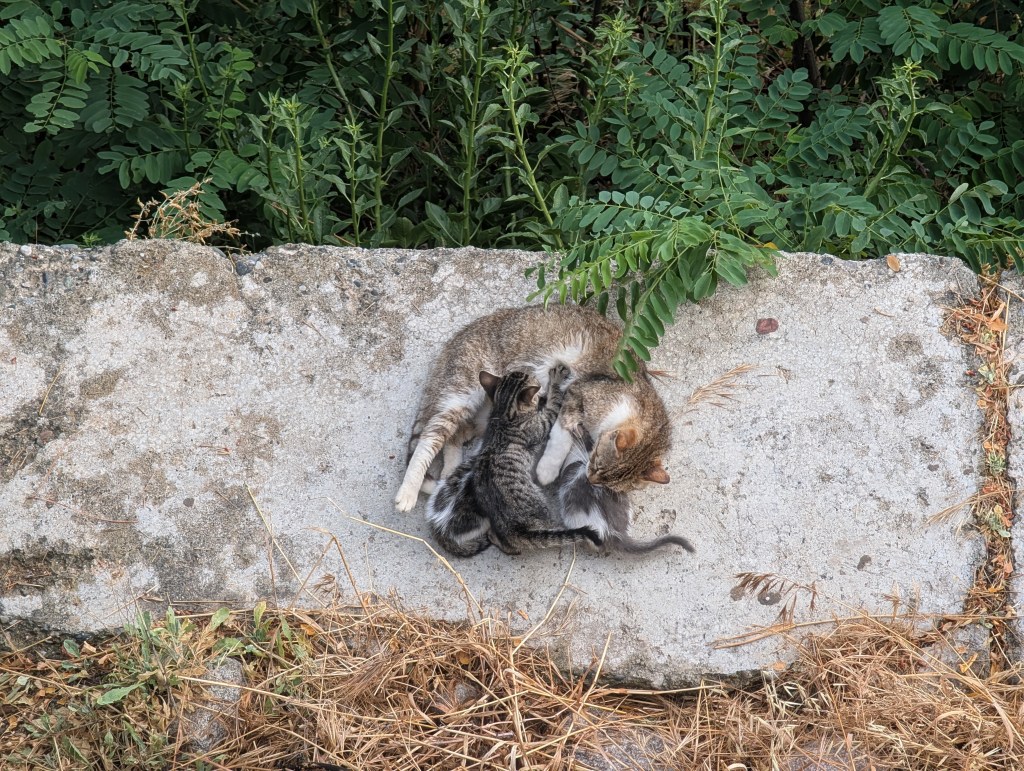
I decide to join an organized tour on my first day in Kastraki; it turns out to be a moderate defeat to my slightly sociophobic self. There is just one other solo traveller, and I want to chat them up, start a conversation, but I don’t. Perhaps it’s my proximity to Vlorë, both temporal and physical, that prevents me from bothering random people, perhaps it’s this memory of M and our embarrassing encounter that makes me hesitant. Even when we stop at a lay-by to observe the dark greenery of the valley, and there is a cat performing its daily hygienic chores at the edge of the parapet, I say nothing. Everyone gathers around the animal, it’s not the first or the last cat that we see this evening, but to get it positioned so perfectly, towering above the valley… A simple he’s so cute or can you take a picture of me and the cat would suffice, but I have a globus in my throat, the right words do not come to me.
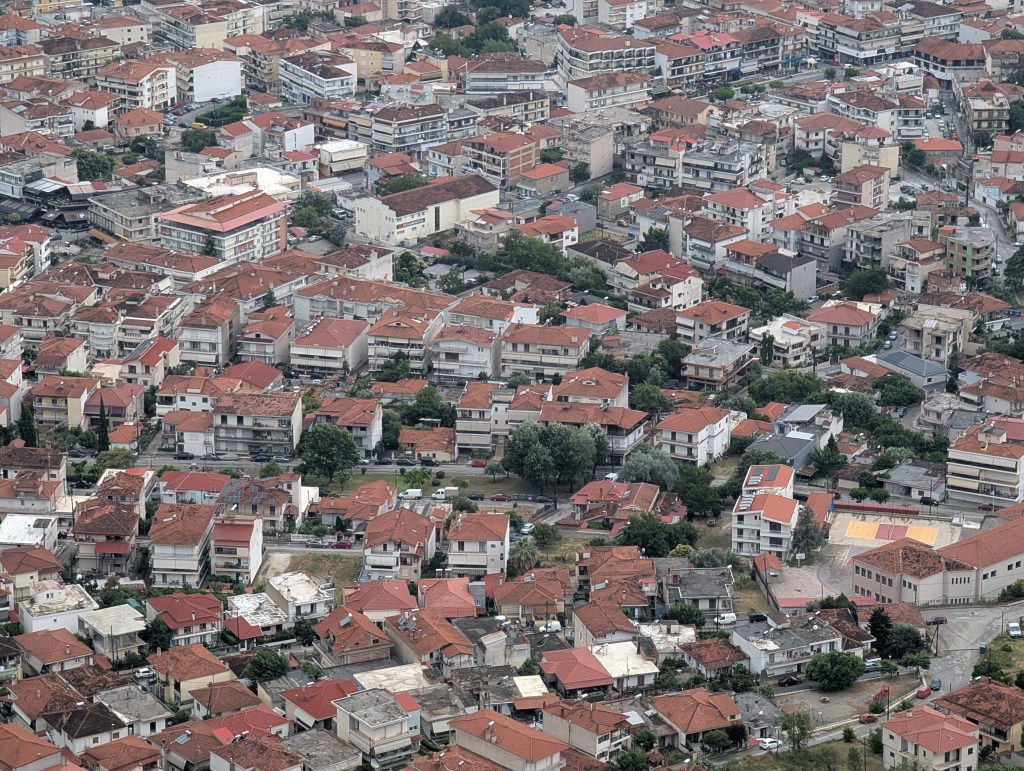
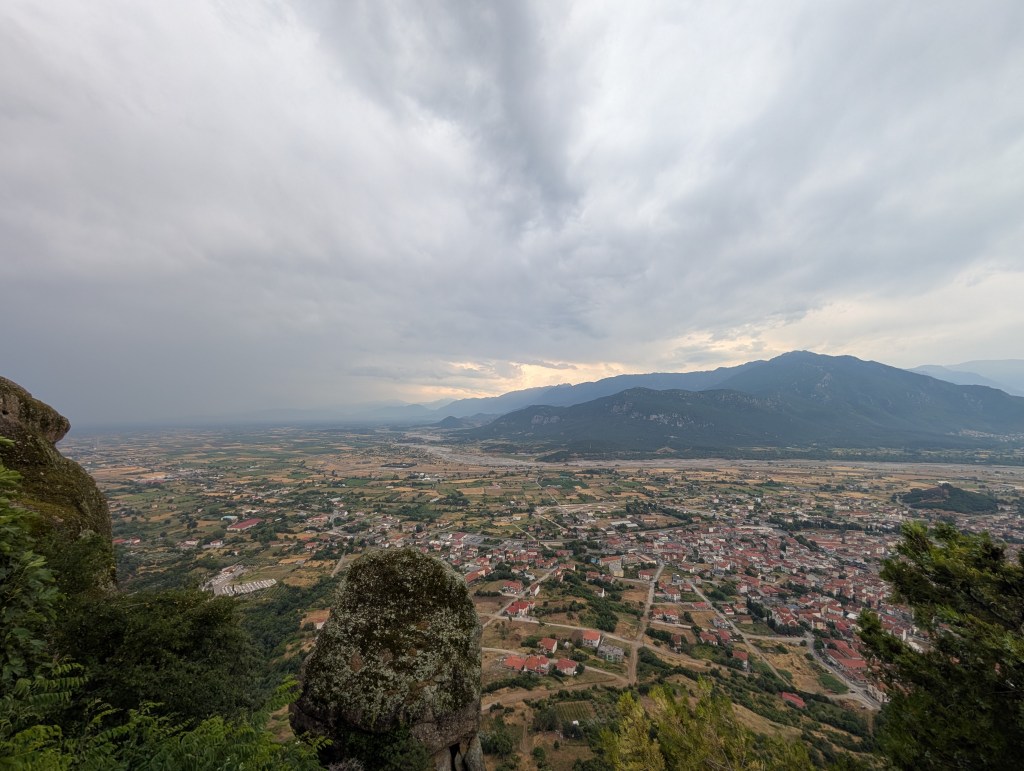
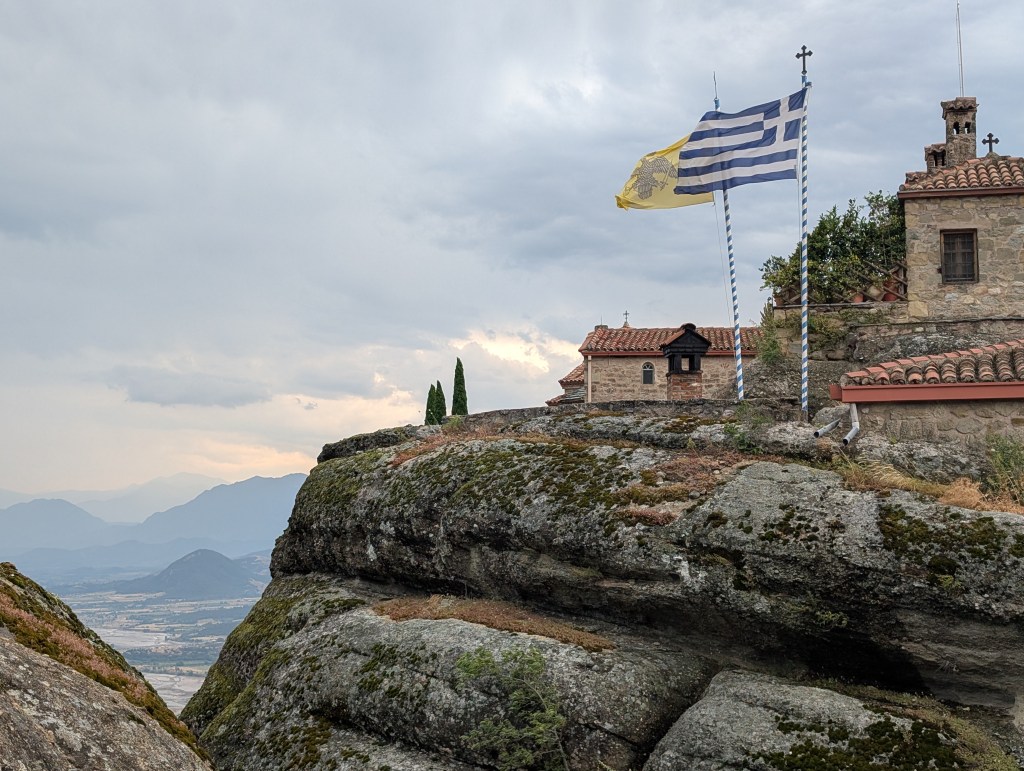
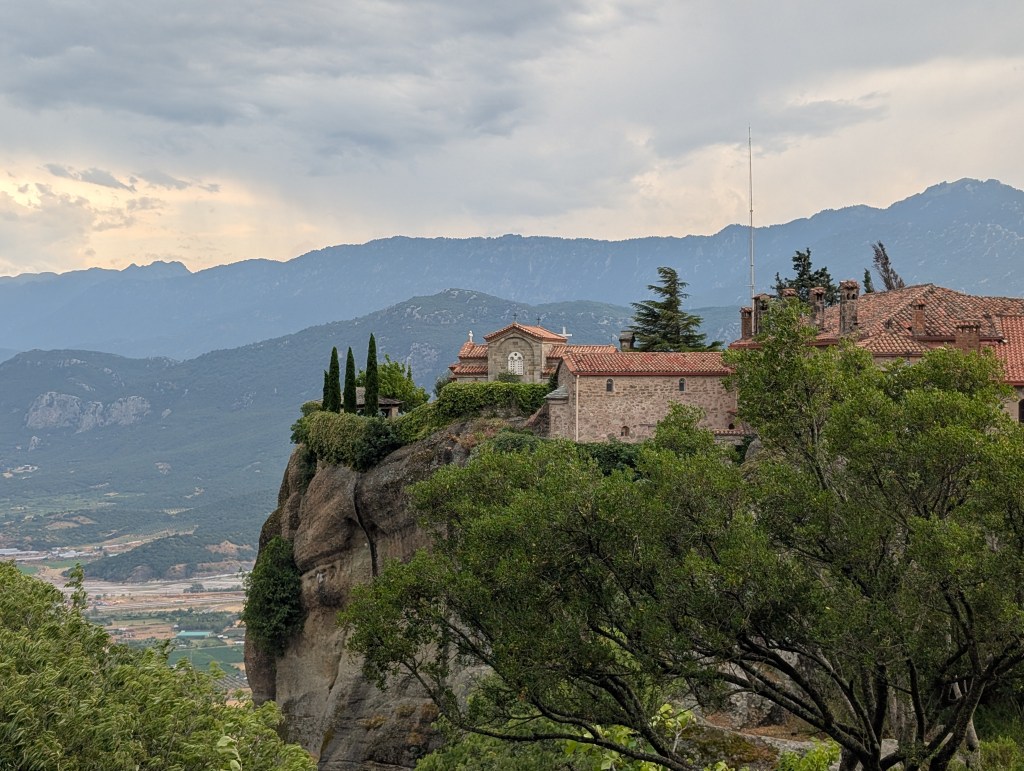
But I am still enjoying the tour. We ride around many local sights of the Orthodox Greek variety; an incessant sound of camera shutters, here’s a church, here’s a steeple. We get close to the caves that served as shelter for the pious men of the Middle Ages; we visit one of the monasteries, and from its backyard observe an impressive panorama of the towns and villages strewn across the valley. Taking pictures of the inside is strictly forbidden, but I take my chances, not for clicks or likes, but to have some kind of remembrance of the atmosphere within the monastery walls: stern and contemplative, and yet giving me the same feeling I always get inside any Christian church: that even me, the ungodly fucker that I am, can find shelter, solace, and forgiveness for my transgressions.
Our final stop is at the top of the hill to observe the sunset. It’s too cloudy to bask in the golden light of our star disappearing beyond the horizon. Instead, we get treated to a battle scene where light fights against two forms of darkness, one coming from the clouds forming dangerously fast above the Meteora and then enveloping us in their humid cold, the other caused by the night herself, inevitable, but always reversible.
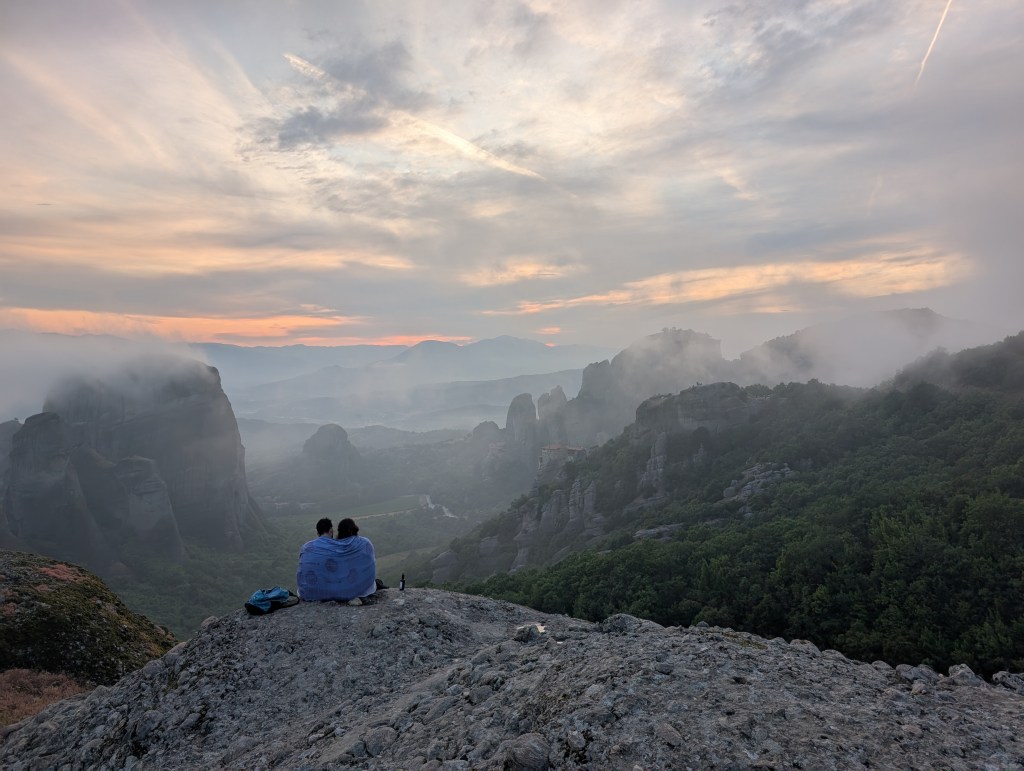
A girl who is not on our tour asks me to take a picture of her. That’s how easy it is, I chastise myself, and then take the girl’s picture. Can you take mine, too? I ask, and it’s as if somebody untangled my twisted tongue. I can do anything and everything now; but it’s too late, as me and the other people from the tour get dropped off in our hotels.
The next day, I decide to take the Meteora loop on my own. I choose the scenic route uphill, through the forest and along the ridges. It’s the first proper hike of my journey, with a reasonable elevation gain of just about 300 meters. Before starting the trip, I had used to run upstairs to my sixth-floor apartment in Malta every time I had a chance to. It seems to have helped a great deal, as the two-hour loop makes me break a sweat a bit, but more because of the hot weather rather than the trail difficulty.
I keep pushing towards the same monastery we visited yesterday. I reach my destination despite the scorching heat and the unbearable sun, but the monastery’s closed. What’s worse, the gate leading to the other half of the loop seems closed as well, but a groundskeeper lets me and a few other hikers through.
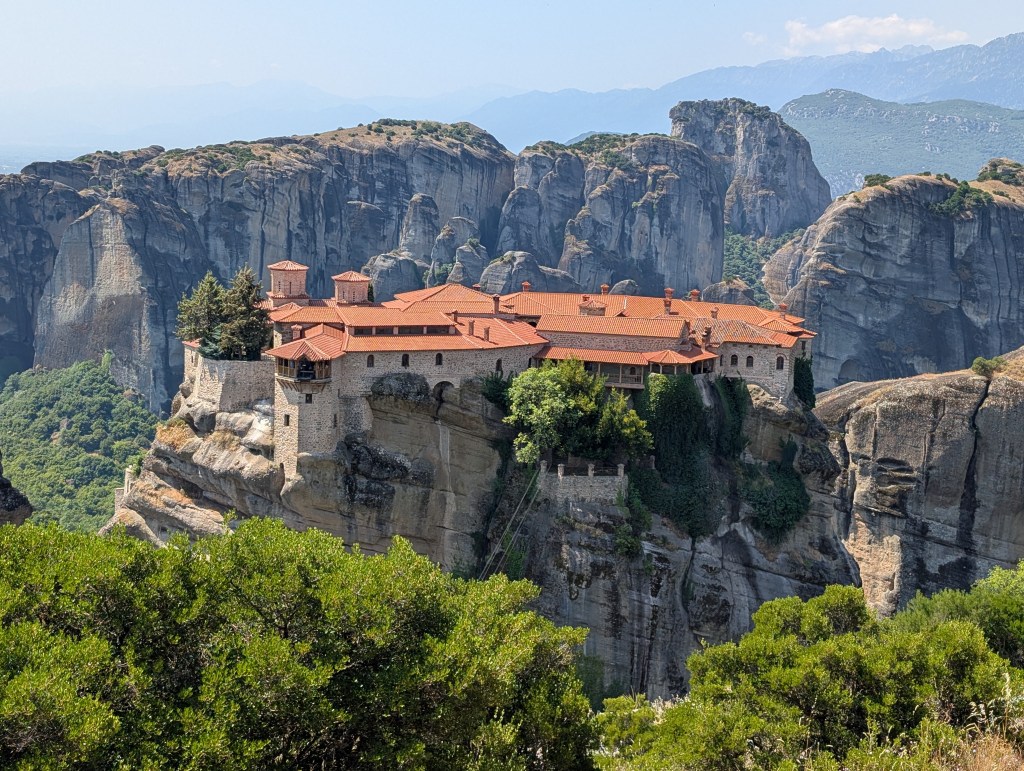
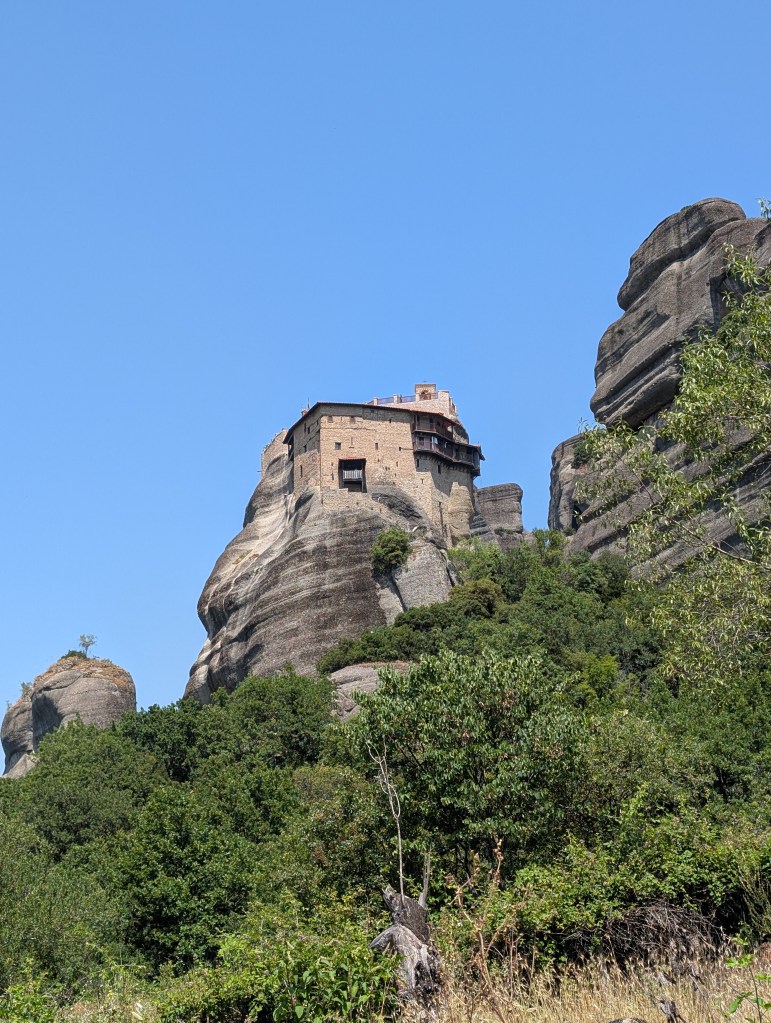
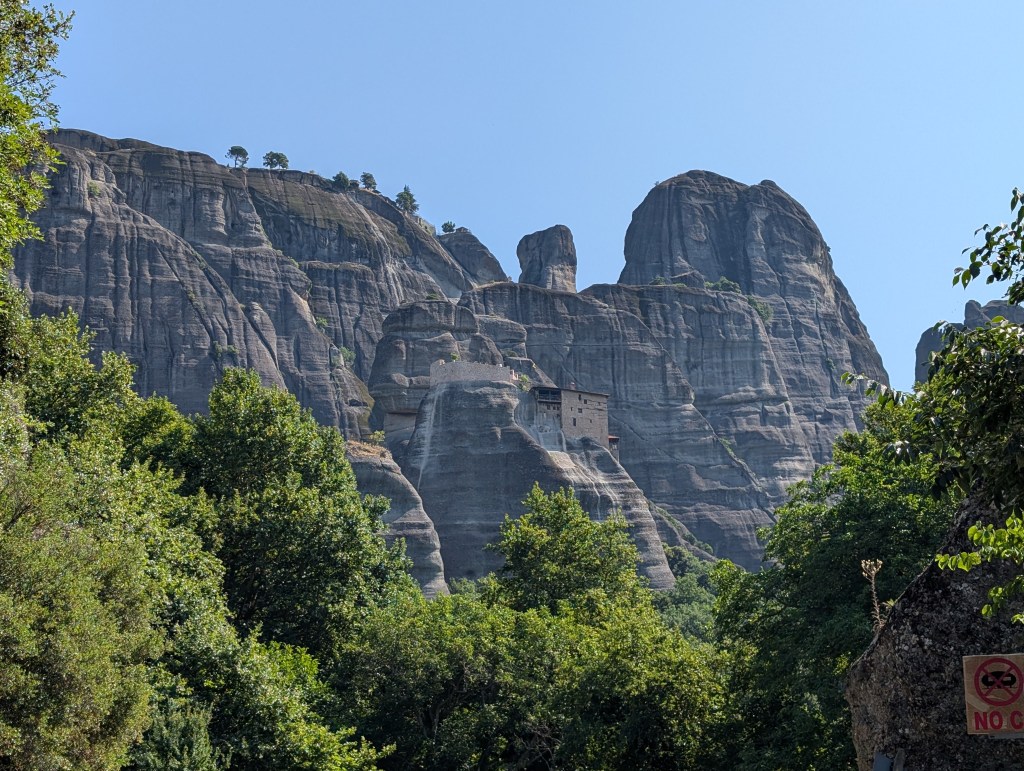
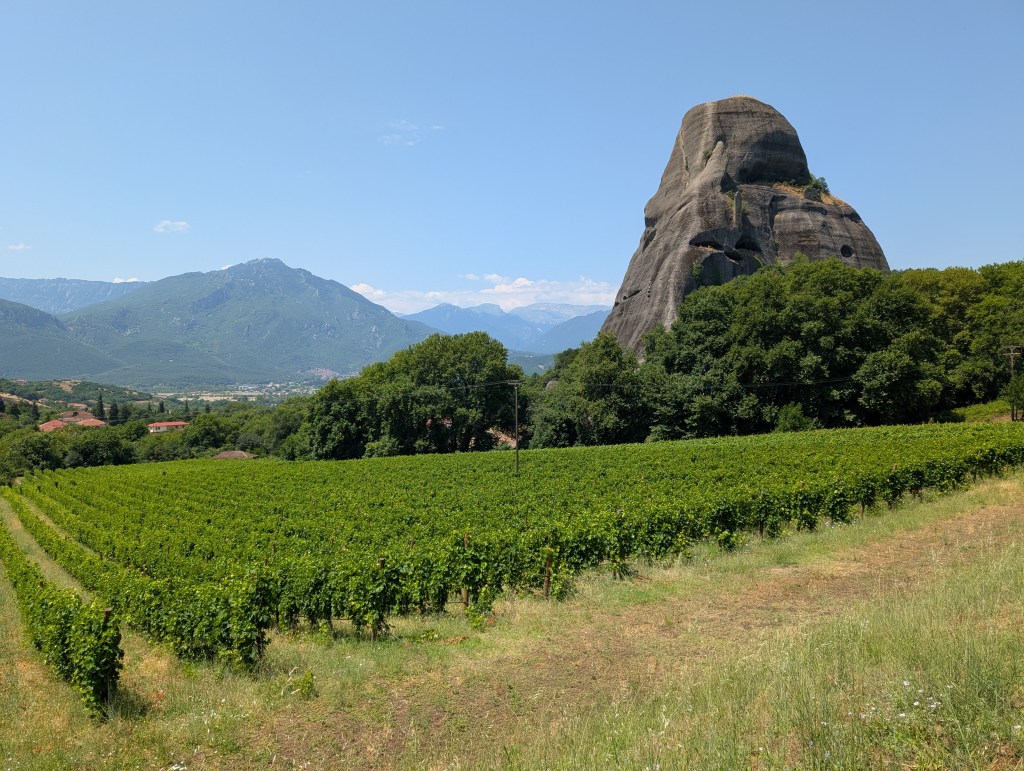
The hike down is a cinch; not for the people going upstairs, though. The winding stairs are not well-maintained and at some point they turn into a forest path leading out of the woods and back to the road I started from. As I pass protruding rocks and vineyards hiding in between them, as I ponder the insanity of building spectacularly adorned monasteries on top of such threatening protuberances, I start thinking of a recently released track by Swans, I Am a Tower. It would be a perfect soundtrack for a reel I want to create; but the song’s licensing rights will eventually prevent me from doing so.
Another thought keeps bothering me, though. It’s been almost two months since I started my trip, and soon I will leave Europe’s backyard, all those Central European, Slavic and Balkan vibes I’m quite accustomed to. I change my plans last-minute. I will go to Athens, and then fly to Malta to get a few bureaucratic obstacles out of my way. But after I arrive to and leave Istanbul, I will be in Asia. An unexpected thought, a rebellious thought arises.
Do I really want to carry on?


Leave a Reply