Are you stuck here too? I ask some British girl sitting at the bus station coffee shop with a resigned face.
Seems so, I wanted to go to Sarandë but there are no more buses going there today.
She’s been sitting there for quite a while, as if trying to teleport herself to a different reality where buses to Sarandë are aplenty. Eventually, she gets up and leaves. Good luck, she says with visible dejection, and disappears into the streets of Vlorë.
I am not giving up yet. The bus was supposed to arrive at 3.30pm; it’s an hour late. Eventually, a small minivan rolls into one of the parking spots that serve as a temporary terminal. It takes us thirty minutes more to get started, and on arriving at the city limits, we stop again. The driver can’t speak any English, but there is a small, wizened guy dressed in a cheap gray suit who can speak German. Can I still do the same?
Ein bisschen, and so we converse with our imperfect versions of German. A big bus will come, says the old man and then orders two waters for himself and me. He shakes his head nervously when I offer to pay, it’s his order, it’s his payment. He tells me how he and his missus are going on a long trip to the very south of Greece, for some well-deserved vacation. Myself, I will only go as far as Ioannina, the first big city across the border from Albania. That is, if the damned big bus ever comes.
It’s two hours past the scheduled departure hour and the wheels of the big bus slowly start rolling. It is not long before we stop for another coffee break, and then half an hour more to get to the border…
…where Frontex agents in their vinyl gloves are waiting, ready to examine every nook and cranny of our pitiful suitcases and backpacks. I get it, I am finally re-entering the European Union from the most unlikely, northern side, some check is warranted. But please, not the three-hour wait with people importing the craziest chattels possible, and having long discussions with the cops whether a metre-by-metre portrait of grandma constitutes high-value art to be declared and taxed.
Five hours late already. The sun is going down, but I fear not – getting accommodation close to the Ioannina bus station is my insurance card.
Except the driver tells me, again through an interpreter, that they are not even going to the city center, offering instead to drop me off at the airport. It can get worse though – upon reaching the city they completely forget about the sole passenger travelling to Ioannina and enter the ring road bypassing the city. It’s the European Union though, I have data roaming and I see on the map that something is not right.
I dart through the aisle to remind the driver I am still here; they can’t turn back, having entered the highway, but they drop me off right there at the ring road. A walk back into town it is, eleven p.m., a highway, just me and my bags and the blinding lights of the incoming cars. Somehow I don’t lose my life on that unexpected hike, and I manage to get to the end of the ring road, next to the airport I was supposed to be dropped off at
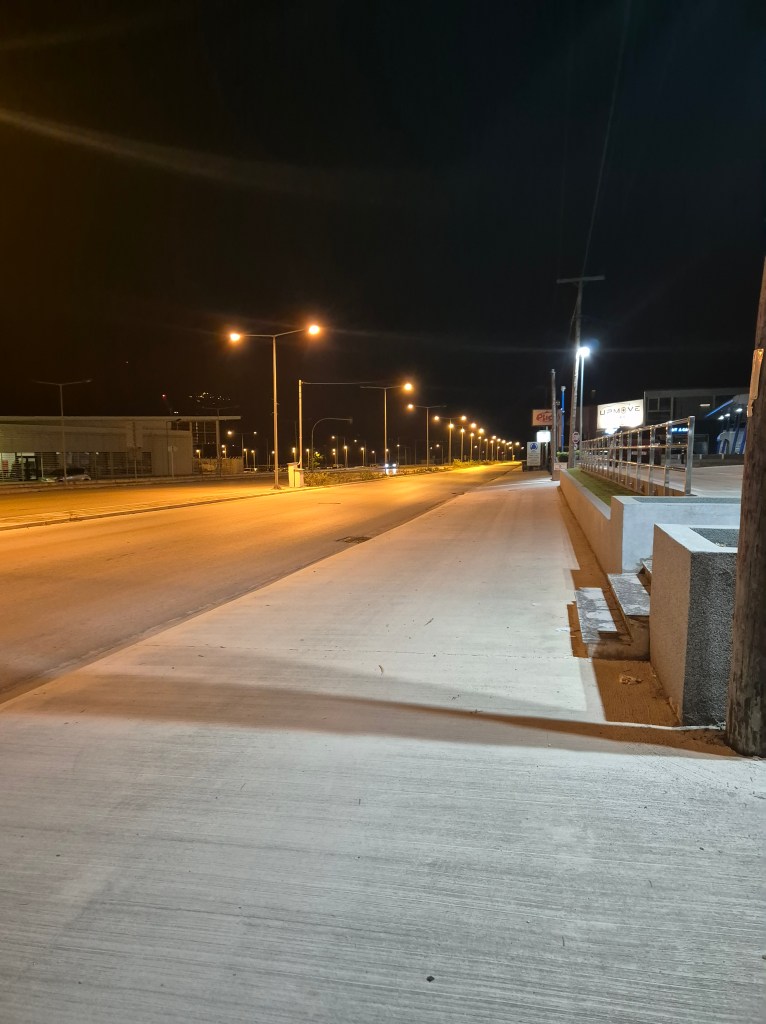
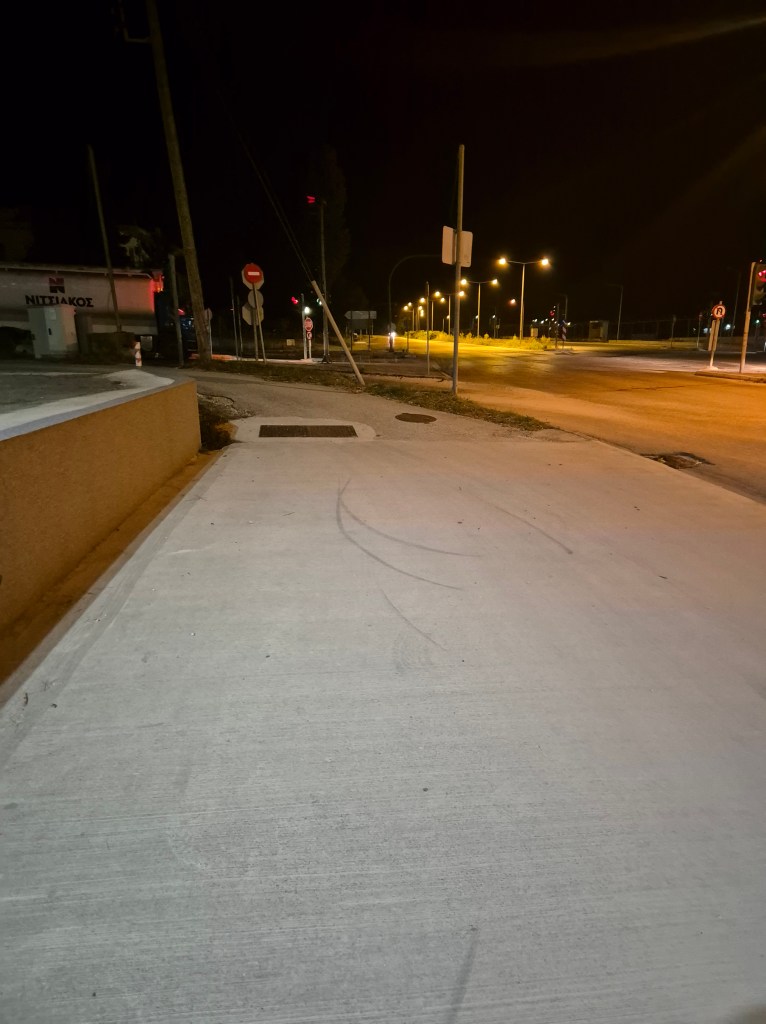
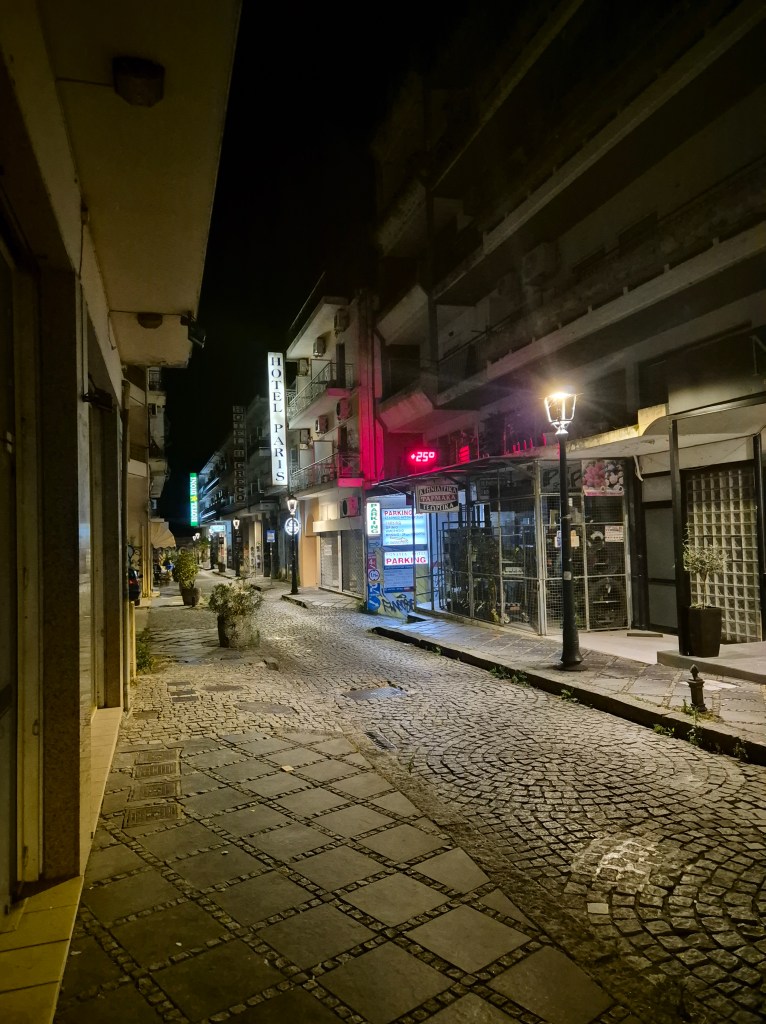
An empty street, a deserted airport, no public transportation to get me to my place, and it’s still about an hour’s walk: thank gods for the taxi apps! It’s all Greek to me but I manage to order one from exactly where I am standing. The guy was having a nap by the airport but is now wide awake and ready to deliver me to the center. I pay about five euros, not terrible for the circumstances I found myself in.
And just like that, I am in Ioannina. It isn’t the most famous of Greek cities; it’s probably not the most beautiful either. But it was on my way, and it shares its name with that of my Grandma’s.
A few months earlier, I got a phone call from her; being the only available, recently funemployed family member, we did a little tour across our hometown’s clinics and hospitals. At eighty eight years old, she’s still hale and hearty, but the years have recently started catching up with her. You know what’s wrong with me, she joked after leaving the ER, it’s a disease called PESEL [a Polish identification number that includes one’s date of birth.] We might not see each other again once you start your trip, she added. But I refuse to believe that will happen, it can’t happen. The last of my grandparents’ generation, she will live to be a hundred years old. And I will live to see her again.
This time, I called her, not for rescue, but to let her know I’m still there, still thinking, and still wishing all the best to her.
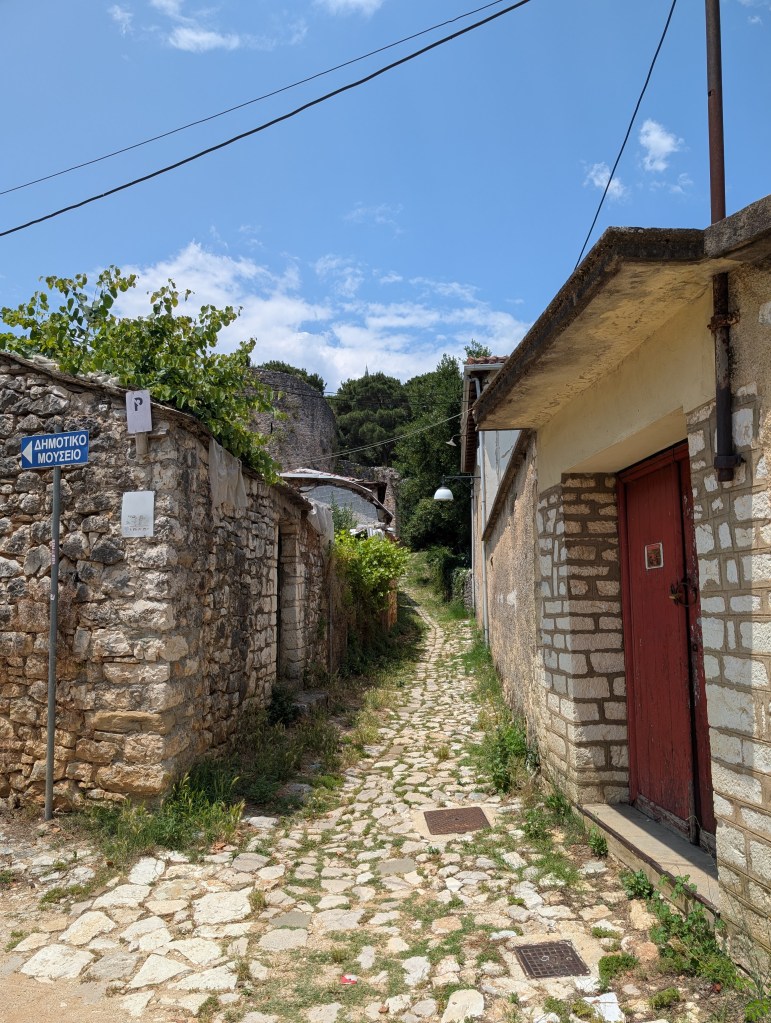
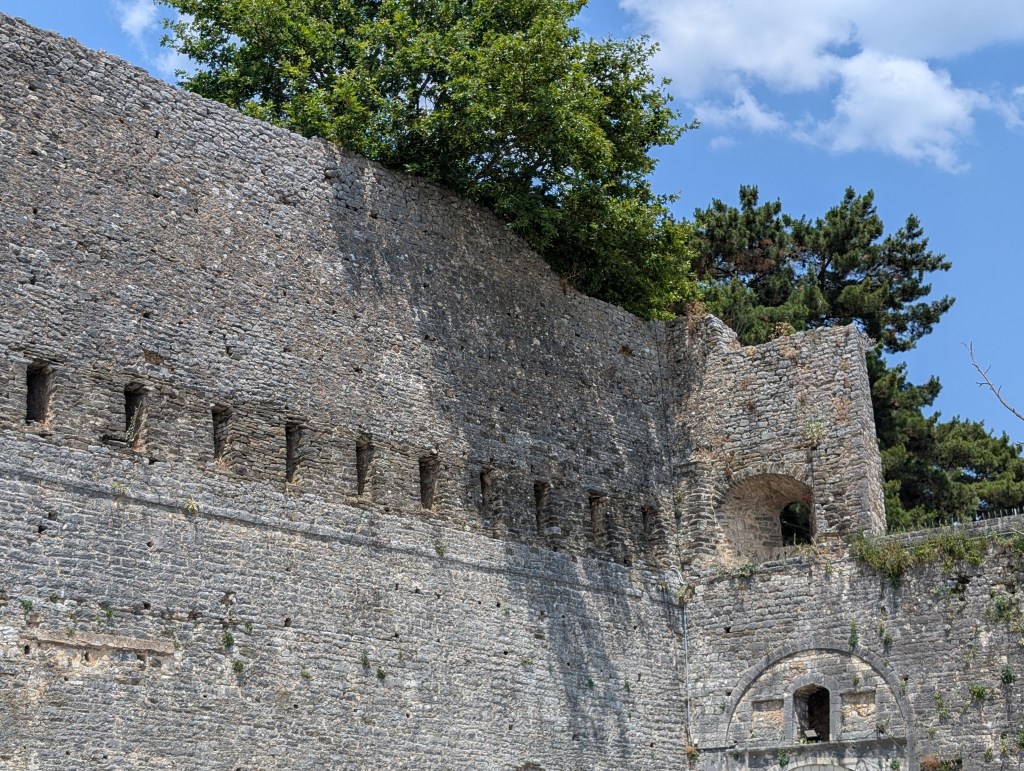
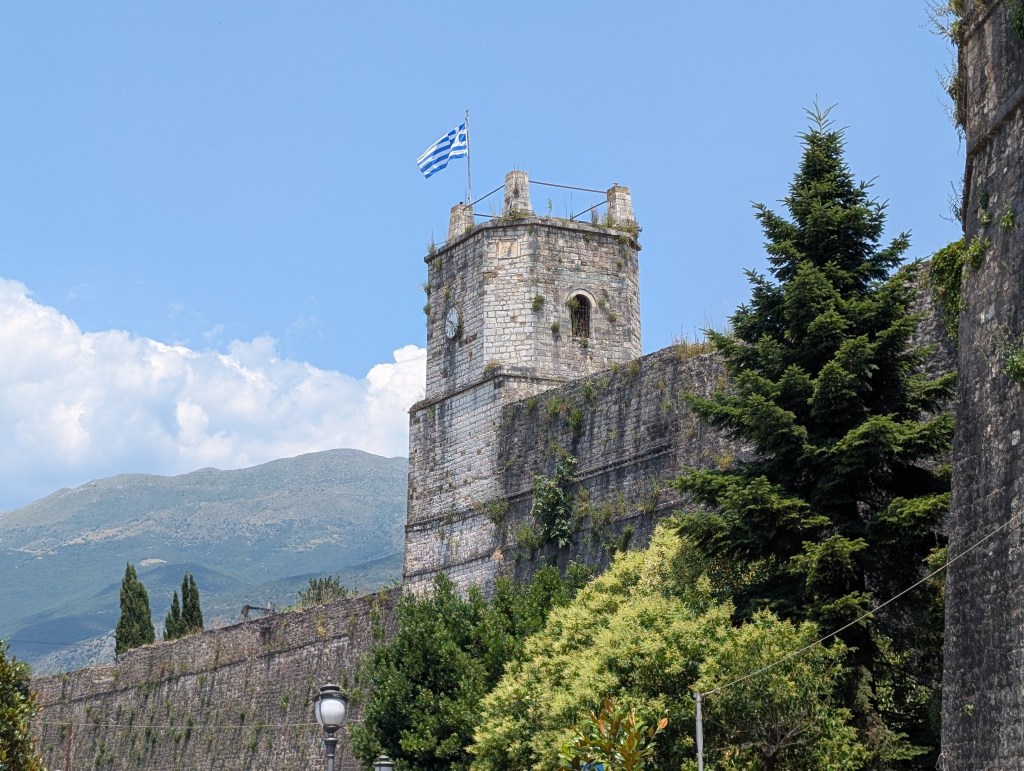
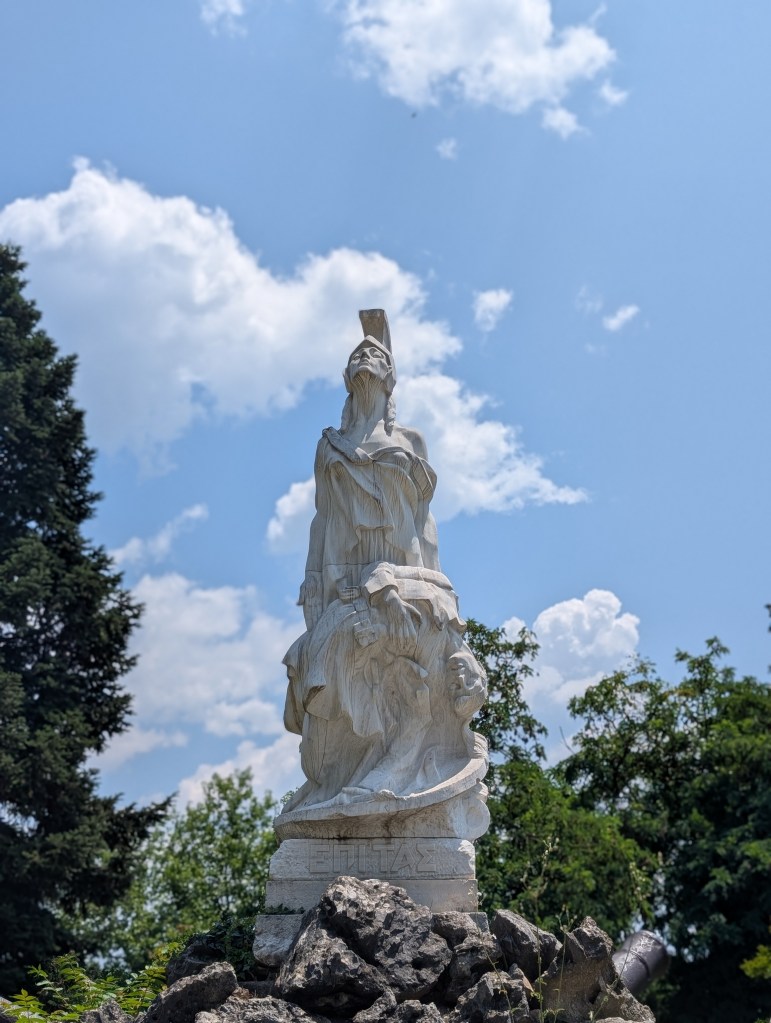
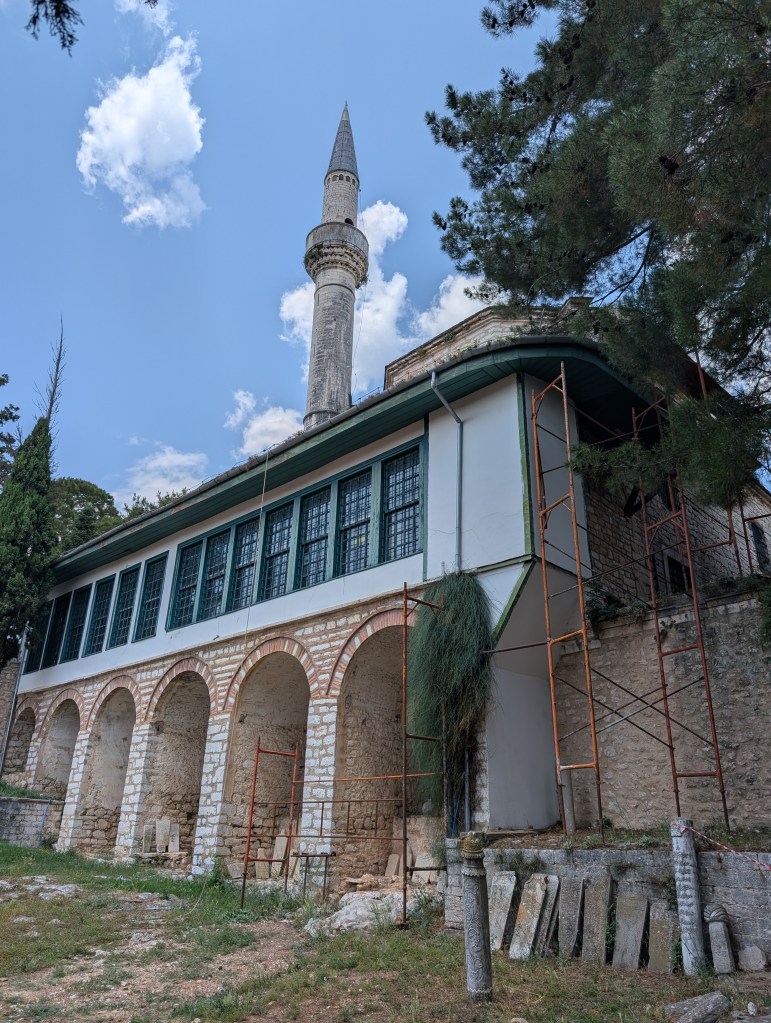
And then I went out to explore the city. Ioannina, one of the main urban areas of northwestern Greece, is a strange mix. The Hellenistic elements are ubiquitous, but so are the Islamic ones. The old fortress walls hide quaint narrow cobblestone streets, but they are also home to a few mosques from the Ottoman period, among them the Aslan Pasha mosque. Built in 1618 in place of the demolished Church of Saint John, it is being renovated; inside, it hosts a museum of ethnography. Just outside the building, massive iron cannons lie rusting; nearby, there is a collection of cannon balls, a reminder of the city’s somewhat violent past.
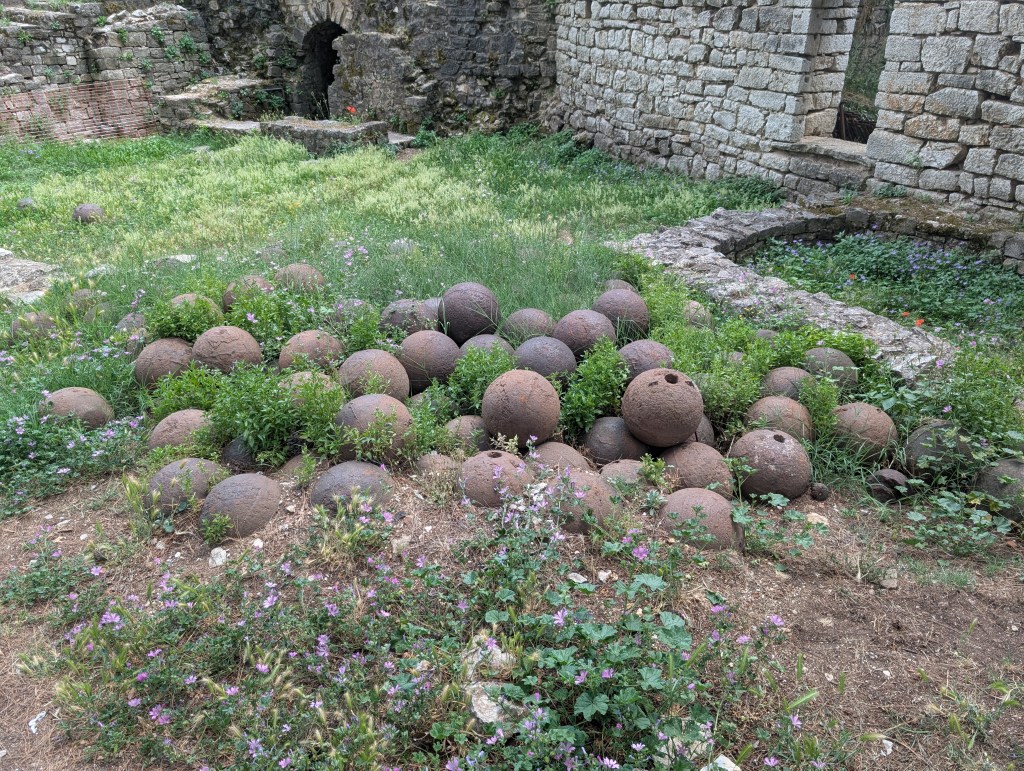
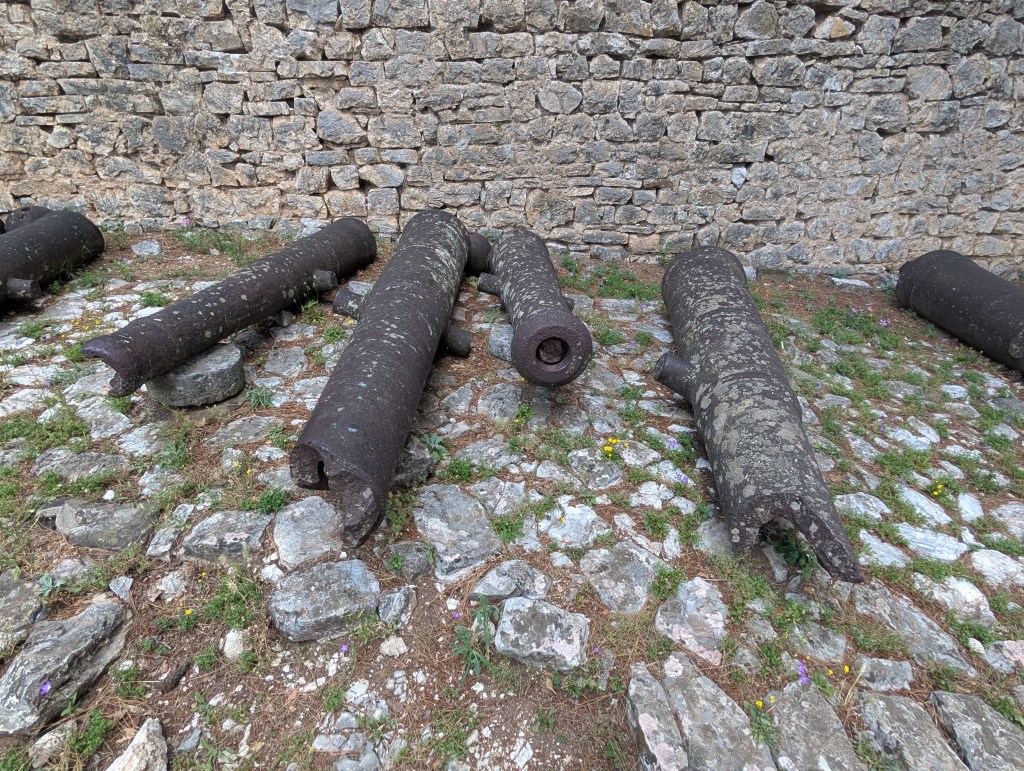
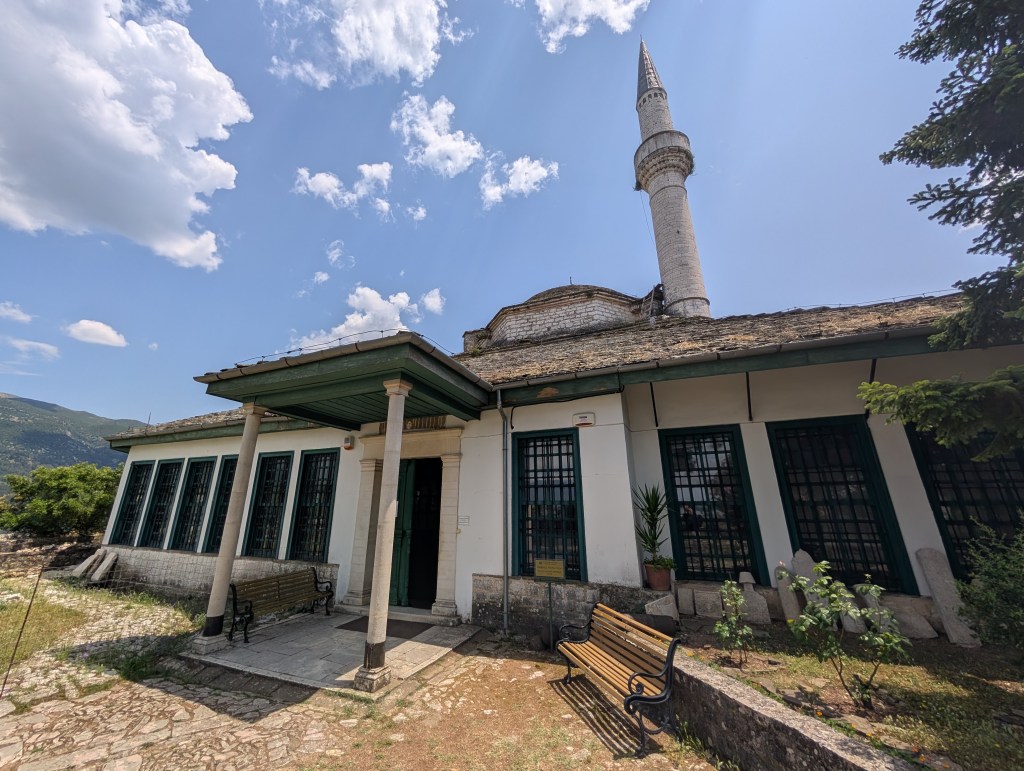
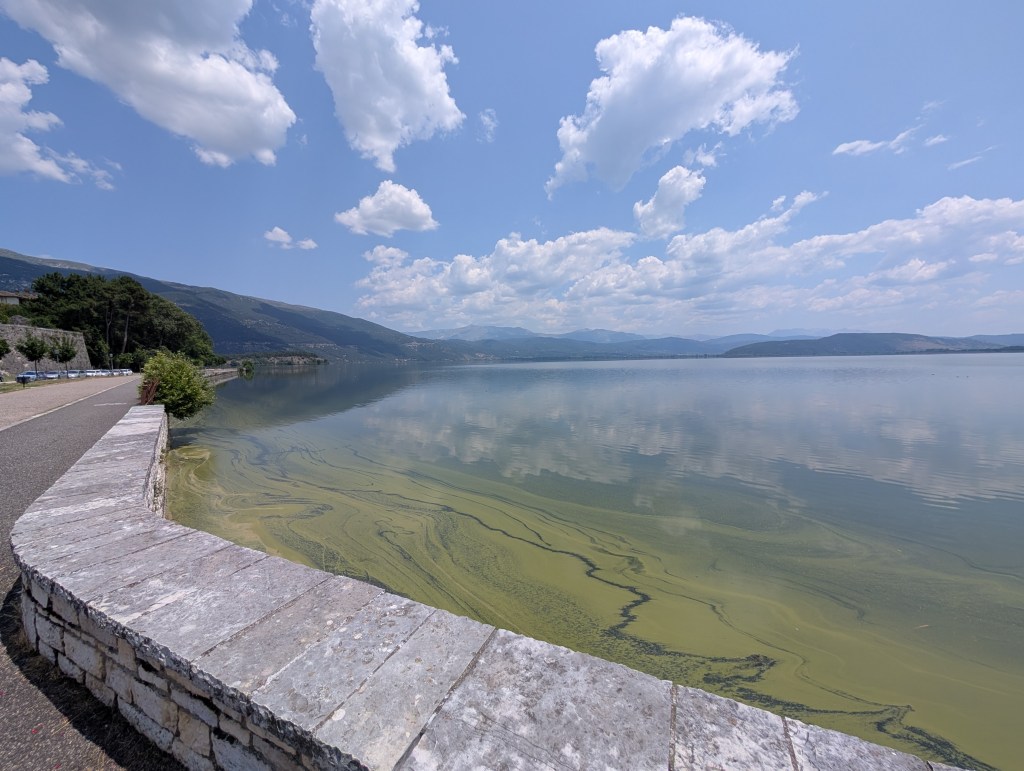
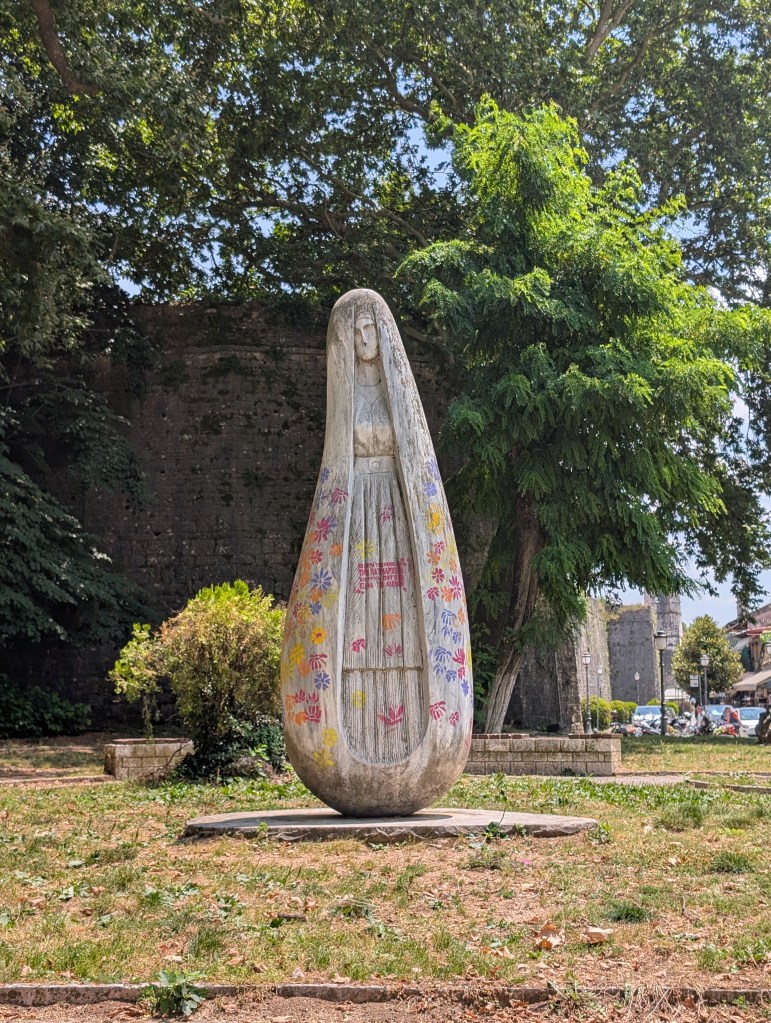
The tourists are few and far between; I eventually leave the antique walls and have a stroll along the Pamvotida Lake. Its surface is very peaceful, but I wouldn’t take a swim in it. Local sewage tends to contaminate the waters of the lake, which has no surface outflow, instead depending on karstic sinkholes leading towards nearby rivers. There is a boat cruise I don’t take, missing the opportunity to see the island where Ali Pasha hid towards the end of his reign. I don’t worry; I will miss so many other things on my way back home, but at the same time, I will see so many things I haven’t even planned. The randomness of a long trip is a comforting thought for my autistic I-gotta-do-it-all attitude. Instead of the island, I see a statue of Holy Mary with some colourful stamps all over it.
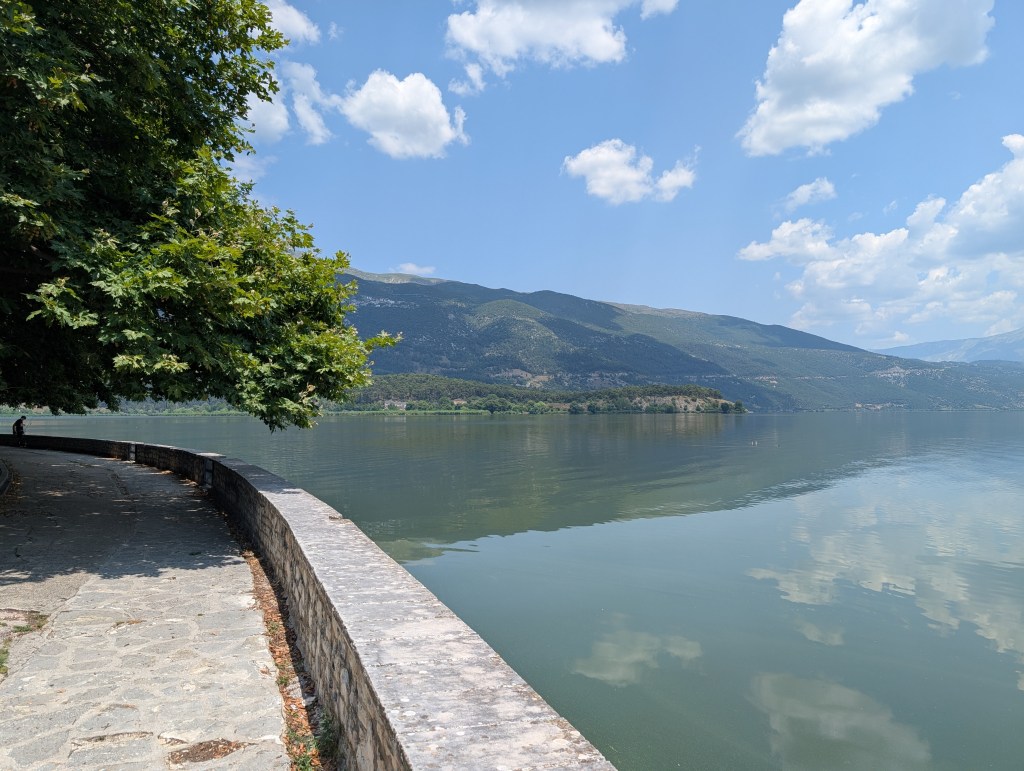
Towards the end of my walk, I get to the KTEL station to buy tickets towards Kalabaka. Meteora monasteries are one thing I simply cannot miss.
 Luke, around the world.
Leave a comment